Lemon Titles in Connecticut: How Buyback Disclosure Works
You find a nearly new SUV on a used car lot for thousands less than the others. Then you spot two words on the paperwork: manufacturer buyback. That usually means a lemon title was issued, and the car came back to the automaker because of a defect it couldn’t fix.
Connecticut doesn’t ban the resale of these cars. It requires that the next buyer be told. This guide explains how a Connecticut lemon title gets branded, what the seller has to disclose, and whether that brand can ever come off.
If you’re new to the topic, our complete guide to Connecticut lemon law covers how a car qualifies in the first place. This article picks up after the buyback. For how the buyback amount itself gets calculated, see our guide to the Connecticut lemon law refund and mileage offset.
What Is a Lemon Title?
A lemon title is a vehicle title that carries a permanent label, called a brand, showing the car was returned to the manufacturer under a lemon law claim or settlement. States use brands to flag a car’s history. You’ve probably heard of salvage or flood brands. A lemon brand works the same way.
The exact wording changes from state to state. Some states say “Lemon Law Buyback.” Others say “Manufacturer Buyback” or “Lemon.” In Connecticut, the wording is set by statute, and it’s spelled out in the next section.
How Connecticut Brands a Buyback Title
The rules live in subsection (g) of Conn. Gen. Stat. § 42-179, the same law that gives Connecticut drivers the right to a refund or replacement for a lemon. When a manufacturer takes a car back because of a defect, the law puts several duties on it.
- Notify the Connecticut Department of Motor Vehicles and give it the year, make, model, VIN, and prior title number.
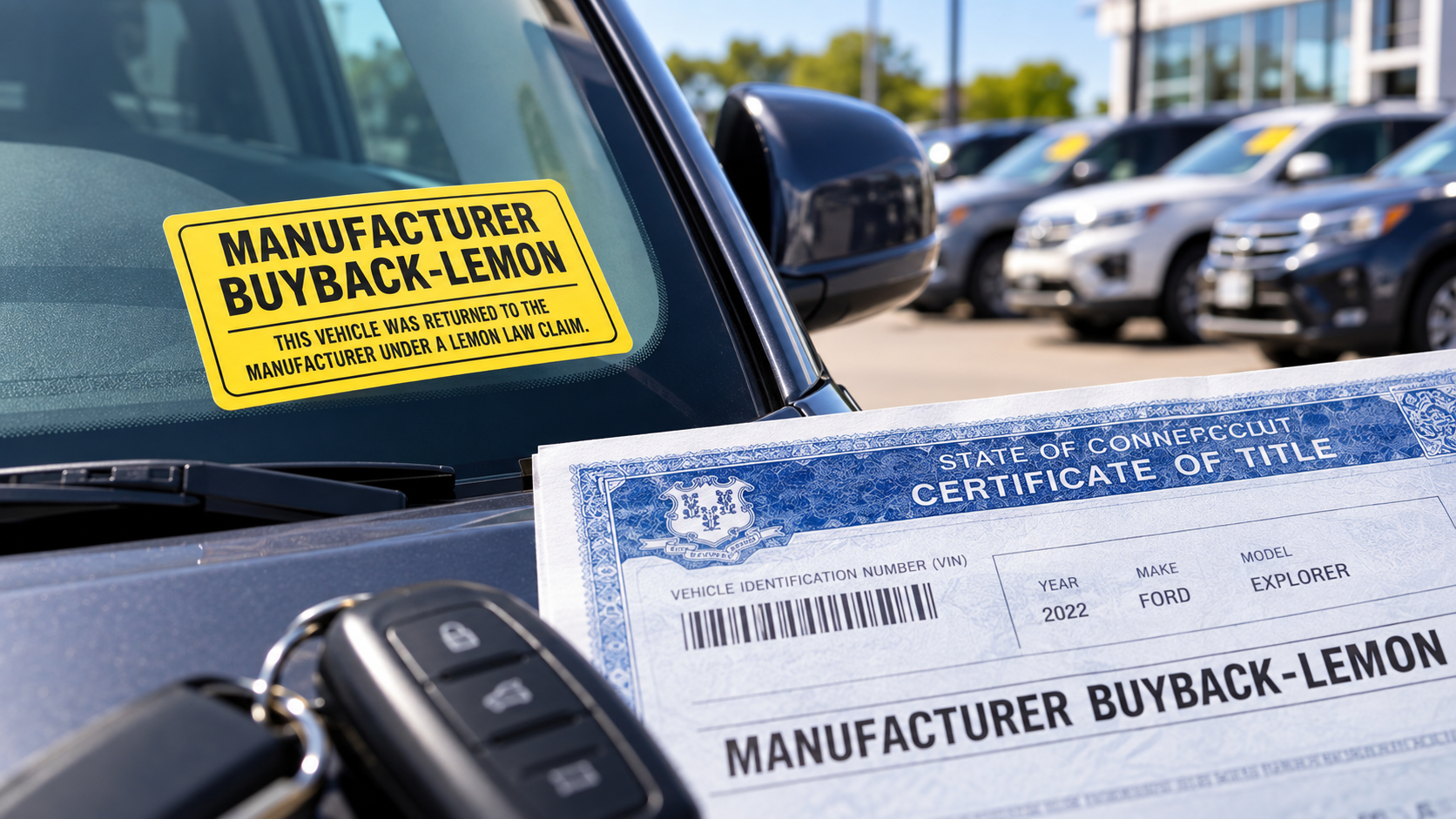
- Stamp the words “MANUFACTURER BUYBACK-LEMON” on the face of the original title in letters at least one-quarter inch high.
- Send a copy of the stamped title to the DMV within 30 days of receiving the title.
- Under the current version of the statute, send proof of that submission to the Department of Consumer Protection within the same 30 days.
The DMV keeps a list of these buyback vehicles. When anyone later applies for a new title on one of them, the DMV prints “MANUFACTURER BUYBACK-LEMON” on the new title too. The person applying for the title also has to tell the DMV that the car was returned. That’s how the brand follows the car from owner to owner.
Up to $10,000: the fine the Department of Consumer Protection can impose on a manufacturer that misses the 30-day stamping and submission deadline. The manufacturer can ask for a hearing within 10 days of getting notice of the fine.
It Covers Settlements, Not Just Arbitration Wins
A lot of people assume the brand only applies when a consumer wins a formal case. That’s not how the statute reads. The duty applies whether the car came back through a court ruling, an arbitration award, or a voluntary settlement.
Say Daniela in Waterbury has a new crossover that stalls on I-84 four separate times. Before her arbitration hearing, the manufacturer offers to buy the car back, and she accepts. No arbitrator ever rules. The car still gets the lemon title, because the return happened in settlement of a lemon law complaint. Our walkthrough of how a CT lemon law claim works shows where settlements and arbitration fit in the process.
What a Connecticut Buyer Must Be Told
The title brand is one layer. The second layer is a written disclosure. Under § 42-179(g)(1), no returned lemon can be resold, transferred, or leased in Connecticut without a clear and conspicuous written disclosure that it was returned. The law requires that disclosure to show up in two places.
- On the car itself. The disclosure has to be physically attached to the vehicle.
- In the sale or lease contract. The disclosure also has to be written into the paperwork the buyer signs.
The DMV’s regulations fill in the details. Conn. Agencies Regs. § 42-179-7 says the disclosure statement goes on the lower corner of the windshield farthest from the driver, where it can be read from outside the car. It also says the person who takes the car back has to file a copy of that statement with the DMV within 20 days, and the car can’t be sold or auctioned in Connecticut until that’s done.
Key takeaway: In Connecticut, a returned lemon carries three separate signals. There’s the branded title, the windshield disclosure, and the disclosure written into the sale or lease contract.
Cars Bought Back in Another State
Buybacks often get shipped to auctions far from where they were returned. Connecticut’s law reaches those cars too. Subsection (g)(4) applies the disclosure rules to vehicles returned in another state when the seller or lessor knows about the return and then sells, transfers, or leases the car in Connecticut.
Picture a pickup that was bought back in New York, sold at auction, and then put on a used lot along the Berlin Turnpike. If that Connecticut dealer actually knows it’s a buyback, the Connecticut disclosure rules apply. Note the “actual knowledge” piece. It’s one of the details that can matter a lot when a later buyer says nobody told them.
A Hypothetical: Julian Buys a Buyback in New Haven
Julian is shopping for a used sedan in New Haven. He finds one that’s two years old with 18,000 miles, listed at $19,500. Similar sedans nearby are going for around $24,000. A yellow sticker sits in the bottom corner of the passenger side of the windshield.
The sticker says the car was returned to the manufacturer. The contract has a matching disclosure, and the title reads “MANUFACTURER BUYBACK-LEMON.” In this version, the system worked the way the statute describes. Julian can see the history before he signs.
Now change one fact. The sticker is gone, the contract says nothing, and Julian only learns the truth six months later when a trade-in appraiser pulls a vehicle history report. That’s the scenario the disclosure rules exist to stop. Section 42-179(i) says the lemon law doesn’t limit rights a consumer has under any other law, so a buyer in Julian’s position might look at Connecticut’s general consumer protection statute, the Connecticut Unfair Trade Practices Act, along with contract and fraud principles. Whether any of those fit depends on the specific facts, including who knew what and when.
Can a Lemon Title Be Removed in Connecticut?
This is one of the most searched questions on the topic, and the honest answer has two parts. The statute and the regulations treat the windshield disclosure and the title brand differently.
The Windshield Disclosure
Section 42-179(g)(1) lets the Commissioner of Motor Vehicles set up a way to remove the written disclosure once the car is no longer defective. Under § 42-179-7(c), removal requires the commissioner’s written approval. That approval depends on an engineering inspection report signed by a licensed professional engineer with expertise in the specific defect.
The report has to list the VIN, the defects behind the buyback, every diagnostic step, every part replaced or repaired, and the engineer’s license and qualifications. Whoever asks for removal pays for the inspection. The commissioner is supposed to approve or deny the request in writing within 60 days.
The Title Brand
The statute tells the DMV to print “MANUFACTURER BUYBACK-LEMON” on any new title issued for a listed buyback vehicle. It doesn’t spell out a process for taking that brand off the title. On top of that, state title brands get reported to the federal National Motor Vehicle Title Information System, where a brand becomes a permanent part of the car’s record.
Watch for: A seller who says a lemon title was “cleared” because the car got repaired. A repair may support removing the windshield sticker through the engineering process. It doesn’t erase the car’s branded history in the national title database.
Should You Buy a Car With a Lemon Title?
That’s a personal decision, and nothing here is a recommendation either way. What the law does is make sure the information is on the table. People weighing a buyback car in Connecticut commonly look at a few things.
- What the defect was. A rattling trim panel and a transmission that slips on the highway are very different problems.
- Whether it was fixed. Repair records and any engineering report under the DMV regulations help show this.
- Remaining warranty. Some manufacturers offer a warranty on buyback cars they resell, and terms vary.
- Financing and insurance. Some lenders and insurers treat branded titles differently than clean ones.
- Future resale. The brand stays with the car, so it will likely affect the price when you sell or trade it in later.
On value, there’s no fixed formula. Buyback cars generally sell for less than comparable clean-title cars, which is why they can look like a bargain. The size of the gap depends on the model, the defect, and how much buyers in your area care about the brand. Buying one from a private seller instead of a dealer adds its own wrinkles, covered in our post on CT private car sale laws.
How Connecticut Compares to Other States
There’s no single federal lemon law title brand. Lemon laws are state laws, so each state picks its own wording, deadlines, and disclosure forms. The federal title database collects those state brands, but it doesn’t make them uniform, and brand definitions vary by state.
That’s why a buyback car that started in another state might show a differently worded brand on an older title. Connecticut’s own label is “MANUFACTURER BUYBACK-LEMON,” and Connecticut’s rules can still apply to an out-of-state buyback that a knowing seller brings here. Older versions of the Connecticut statute used just “MANUFACTURER BUYBACK,” so you may still see that wording on titles from years past.
Common Questions About Lemon Titles in Connecticut
What does “lemon title issued” mean?
It usually means a state branded the vehicle’s title after the manufacturer took it back under a lemon law claim or settlement. On a vehicle history report, it shows up as a title brand event tied to a specific state and date.
Is it illegal to sell a lemon car in Connecticut?
No. Selling or leasing a returned lemon is allowed. What the statute prohibits is selling, transferring, or leasing one without the required written disclosure on the car and in the contract.
Who has to stamp the title, the dealer or the manufacturer?
The manufacturer. Section 42-179(g) puts the stamping and DMV submission duties on the manufacturer that accepts the return. The disclosure duty, by contrast, follows the car into any later sale, transfer, or lease in Connecticut.
How can I tell if a used car is a buyback?
Look at the face of the title for the brand, check the lower passenger-side corner of the windshield for the disclosure sticker, and read the contract. A vehicle history report that draws on the federal title database will also list state brands.
The Bottom Line
Connecticut lets returned lemons go back on the road, but not quietly. Under § 42-179(g), the manufacturer brands the title “MANUFACTURER BUYBACK-LEMON,” and every later sale or lease in the state comes with a written disclosure on the car and in the contract. The windshield sticker can come off through an engineering review, but the title brand stays part of the car’s history.
This article is for educational purposes only and is not legal advice. Reading it does not create an attorney-client relationship. For advice on your specific situation, consult a licensed attorney in your state.