State: Florida

  • Got a Florida Traffic Ticket? Your 30-Day Decision, Explained

    Got a Florida Traffic Ticket? Your 30-Day Decision, Explained

    Got a Florida Traffic Ticket? Your 30-Day Decision, Explained

    Florida handles traffic tickets differently than most states. For the typical Florida traffic ticket, there’s no automatic court date. Instead, the law hands you a deadline and a short menu of choices, and the choice you make in the next 30 days usually decides whether points ever hit your license.

    This guide is built around that decision. It walks through the three paths Florida gives drivers, what each one costs, how the state’s point system counts, and which tickets aren’t really “tickets” at all because they’re criminal charges.

    30 days is the window Florida law gives most drivers to pay, elect traffic school, or request a hearing on a civil traffic ticket.

    This article is general education about Florida law. It isn’t advice about any particular ticket.

    Step Zero: Is It a Civil Infraction or a Criminal Traffic Charge?

    Before anything else, it matters which kind of ticket you’re holding. Most Florida tickets, like ordinary speeding, running a stop sign, or careless driving, are noncriminal traffic infractions. Those are the tickets that come with the 30-day menu under section 318.14, Florida Statutes.

    A smaller group of charges are criminal. Those tickets say the driver must appear in court, and there’s no pay-and-go option. Common examples include:

    • Reckless driving under section 316.192, which can bring up to 90 days in jail and a $25 to $500 fine on a first conviction.
    • Dangerous excessive speeding under section 316.1922, a crime created in 2025 for driving 50 mph or more over the limit, or 100 mph or more in a way that threatens others. A first conviction can bring up to 30 days in jail, a $500 fine, or both.
    • Knowingly driving with a suspended license under section 322.34, which is a misdemeanor on a first conviction.

    Everything in the next few sections applies to civil infractions. Criminal traffic charges run through county court like any other misdemeanor case.


    The Three Paths for a Civil Traffic Ticket in Florida

    Florida tickets are handled through the clerk of court in the county where the ticket was written. Within 30 days, drivers generally pick one of three paths.

    Path A: Pay the Civil Penalty

    Paying the ticket, or setting up a payment plan with the clerk, counts as admitting the infraction and waiving the right to a hearing. The clerk reports it to the Department of Highway Safety and Motor Vehicles (FLHSMV), and the points go on the driving record.

    Path B: Elect a Basic Driver Improvement Course (Traffic School)

    This is the option most Florida drivers mean when they say “traffic school.” Under section 318.14, an eligible driver can elect a state-approved Basic Driver Improvement (BDI) course instead of a court appearance. When that happens:

    • Adjudication is withheld, which the statute says is not a conviction.
    • The civil penalty is reduced by 18 percent.
    • No points are assessed.

    There are real limits. The election has to be made within the 30-day window, and FLHSMV says the driver must tell the clerk and pay an election fee before taking the course. A driver can’t elect it if they did so in the previous 12 months. Commercial license holders can’t use it, and neither can drivers cited for going 30 mph or more over the limit.

    Heads up: Plenty of websites still say drivers get five traffic school elections in a lifetime. The current version of section 318.14 allows eight. The once-every-12-months limit still applies.

    Path C: Request a Hearing

    A driver can instead contest the ticket in front of a county court judge or civil traffic hearing officer. The State has to prove the infraction beyond a reasonable doubt, which is the same standard used in criminal cases. If the official finds no infraction, no penalty is imposed.

    Choosing a hearing gives up the fixed civil penalty. If the infraction is proven, the official can impose a penalty of up to $500, or up to $1,000 for speeding in a school or construction zone, and can order driver improvement school.

    Same Ticket, Three Outcomes

    Say Andre is driving his Toyota Tacoma on I-4 near downtown Orlando and gets cited for 17 over. Here’s how his three paths compare:

    1. He pays. The base civil penalty for 15 to 19 over is $150, plus court costs and county fees. Four points go on his record.
    2. He elects traffic school. His civil penalty drops by 18 percent, he pays the clerk’s election fee and the course provider, adjudication is withheld, and no points are assessed. He uses one of his eight lifetime elections.
    3. He requests a hearing. If the State can’t prove the violation beyond a reasonable doubt, he owes nothing. If it can, the official sets the penalty, which could be higher than $150.

    None of those is automatically the right answer. It depends on his record, whether he’s used traffic school recently, and the facts of the stop.

    What Happens If the 30 Days Pass

    Missing the deadline adds a $16 late penalty under section 318.18. It can also lead to a license suspension for failure to pay or appear, which Florida drivers often call a “D6” suspension. Under section 322.245, the clerk reports the failure and FLHSMV suspends the license until the ticket is resolved.


    How Much Is a Speeding Ticket in Florida?

    Florida sets the base civil penalty for speeding in section 318.18, tiered by how far over the limit the driver was:

    • 1 to 5 mph over: warning
    • 6 to 9 mph over: $25
    • 10 to 14 mph over: $100
    • 15 to 19 mph over: $150
    • 20 to 29 mph over: $175
    • 30 mph or more over: $250

    Those numbers are only the starting point. Speeding fines double in a school zone and in a posted construction zone when workers are present. On top of the penalty, state law adds court costs and fees, and counties can add their own surcharges. That’s why the total on two identical speeding tickets can look different in Miami-Dade and in Hillsborough.

    At 50 mph or more over, the situation changes completely. That’s the dangerous excessive speeding threshold, and it’s a criminal charge with a mandatory court appearance rather than a payable ticket.

    How Much Is a Red Light Ticket in Florida?

    The statute sets the red light penalty at $158 whether an officer writes it or a camera catches it. The difference is points. An officer-issued red light ticket carries 4 points. A red light camera violation under section 316.0083 carries no points, and state law says it can’t be used to set insurance rates.

    School zone speed cameras, authorized under section 316.1896, work the same way. The fine is $100, and no points are assessed.


    Florida’s Point System, in Plain Numbers

    Points are assigned under section 322.27. Florida’s scale is compact:

    • Speeding up to 15 mph over: 3 points
    • Speeding more than 15 mph over: 4 points
    • Reckless driving: 4 points
    • Running a red light (officer-issued): 4 points
    • Passing a stopped school bus: 4 points
    • Any other moving violation causing a crash: 4 points
    • Speeding that causes a crash: 6 points
    • Leaving the scene of a crash with property damage over $50: 6 points
    • Most other moving violations, including careless driving: 3 points

    Careless driving under section 316.1925 is one of the most common Florida tickets after a crash. It requires driving in a careful and prudent manner, and a violation is a noncriminal moving violation.

    The Three Suspension Windows

    Florida doesn’t use a single point cap. It uses three windows, each with its own suspension:

    • 12 points within 12 months: up to 30 days
    • 18 points within 18 months: up to 3 months
    • 24 points within 36 months: up to 1 year

    FLHSMV counts from the offense date of each conviction, not the date the case closed. And after a driver’s first and only points suspension is reinstated, the statute deducts 3 points from the record.

    How Long Do Points Stay on Your License in Florida?

    There’s no single expiration date written into section 322.27. What matters for suspension is how many points fall inside the 12-, 18-, and 36-month windows. The violations themselves stay on the driving record longer, and insurers review that record when setting rates. That’s a big reason traffic school is popular. A withheld adjudication through BDI keeps the points from landing at all.

    Out-of-State Tickets

    Section 322.27 lets FLHSMV record an out-of-state conviction against a Florida driver at the same point value it would carry in Florida. That’s a different approach from New York, which generally doesn’t add points for out-of-state tickets.

    Say Gail lives on Long Island, keeps her New York license, and spends winters in Naples. If she gets a speeding ticket on I-75 in Collier County, it’s handled by the Collier County clerk, and she has the same 30-day menu as anyone else. How her home state treats the conviction is a New York question.


    Suspended License in Florida: The Four Common Routes

    Florida suspensions tend to come from one of four places. FLHSMV’s page on suspensions and revocations covers each one, and it links to the state’s online Driver License Check for verifying status.

    1. Unpaid or ignored tickets. The D6 suspension described above. It usually lifts once the clerk’s side is resolved and any reinstatement fee is paid.
    2. Points. The 12, 18, and 24-point windows.
    3. Habitual Traffic Offender status. According to FLHSMV, 15 moving violations with points within five years, or three major offenses within five years, brings a five-year revocation.
    4. Offense-based suspensions. Certain convictions, including DUI and a second dangerous excessive speeding conviction within five years, carry their own suspension or revocation.

    Unknowingly Driving With a Suspended License in Florida

    Florida draws a sharp line based on knowledge. Under section 322.34, driving on a suspended license without knowing about the suspension is a moving violation handled under the civil traffic rules. Driving with knowledge is a crime: a second-degree misdemeanor for a first conviction and a first-degree misdemeanor for a second, with a possible felony in some later cases.

    Say Sofia moved from Fort Lauderdale to Tampa and never updated her address. A notice about an unpaid ticket went to her old apartment, and her license was suspended without her knowing. If she’s stopped on Dale Mabry Highway, that first stop is typically the civil version. But once she’s been cited, the law treats her as knowing. A second stop before she fixes it can become the criminal version.

    Repeated suspended-license convictions also count toward Habitual Traffic Offender status, which is why these tickets can snowball in Florida.

    Hardship Licenses

    For some suspensions, Florida allows a restricted “hardship” license while the suspension runs. These are handled by FLHSMV’s Bureau of Administrative Reviews, not by the court that heard the ticket. Eligibility depends on why the license was suspended. For several non-DUI suspensions, FLHSMV lists an Advanced Driver Improvement course and a reinstatement fee among the requirements, and some suspensions aren’t eligible at all.


    Florida’s Move Over Law

    Florida’s Move Over law, section 316.126, is one of the most-searched traffic rules in the state, and it grew in 2024. Drivers have long had to move over for stopped emergency vehicles, tow trucks, and sanitation and utility vehicles. Since January 1, 2024, the law also covers any disabled vehicle stopped with its hazard lights on, flares out, emergency signs posted, or people visibly present.

    When moving over isn’t safe or possible, drivers must slow to 20 mph below the posted limit, or to 5 mph when the limit is 20 mph or less. FLHSMV says a violation brings a fine, fees, and points.

    Say Marisol is driving her Honda Odyssey on the Turnpike near Port St. Lucie and passes a sedan on the shoulder with a flat tire and its hazards flashing. Before 2024, that car wasn’t covered. Now, if she stays in the adjacent lane at full speed, she can be cited.


    A Florida Traffic Ticket Glossary

    Florida tickets, court notices, and FLHSMV letters use terms that don’t show up much in other states. Here’s what the most common ones mean.

    • Civil infraction: A noncriminal traffic violation resolved by penalty, traffic school, or hearing.
    • Adjudication withheld: The court doesn’t formally convict. Under section 318.14, it isn’t a conviction.
    • BDI: Basic Driver Improvement, the course drivers can elect to avoid points on an eligible ticket.
    • ADI: Advanced Driver Improvement, a longer course often required for points suspensions or hardship licenses.
    • D6 suspension: The common name for a suspension caused by failing to pay or appear on a ticket.
    • HTO: Habitual Traffic Offender, a status that brings a five-year revocation.
    • BAR: FLHSMV’s Bureau of Administrative Reviews, which handles hardship license requests.

    How many points is a speeding ticket in Florida?

    Three points for up to 15 mph over, four points for more than 15 over, and six if the speeding caused a crash. Camera-issued school zone speeding tickets carry no points.

    Can you take traffic school for any ticket in Florida?

    No. It’s limited to eligible civil infractions, it has to be elected within 30 days, and it isn’t available for commercial license holders, for speeding 30 mph or more over, or for a driver who elected it within the past 12 months.

    Is reckless driving a crime in Florida?

    Yes. It’s a criminal traffic offense with possible jail time, a mandatory court appearance, and 4 points on conviction. Careless driving, by contrast, is a civil moving violation.


    The Short Version

    Most Florida traffic tickets come down to a 30-day choice: pay, elect traffic school, or request a hearing. That choice decides whether points land, and the points feed into three separate suspension windows.

    Key takeaway: In Florida, the ticket itself is rarely the whole story. The deadline, the traffic school rules, and the difference between civil and criminal charges shape what one ticket really costs.

    This article is for educational purposes only and is not legal advice. Reading it does not create an attorney-client relationship. For advice on your specific situation, consult a licensed attorney in your state.
  • How Many Recalls Before Lemon Law Applies in Florida?

    How Many Recalls Before Lemon Law Applies in Florida?

    How Many Recalls Before Lemon Law Applies in Florida?

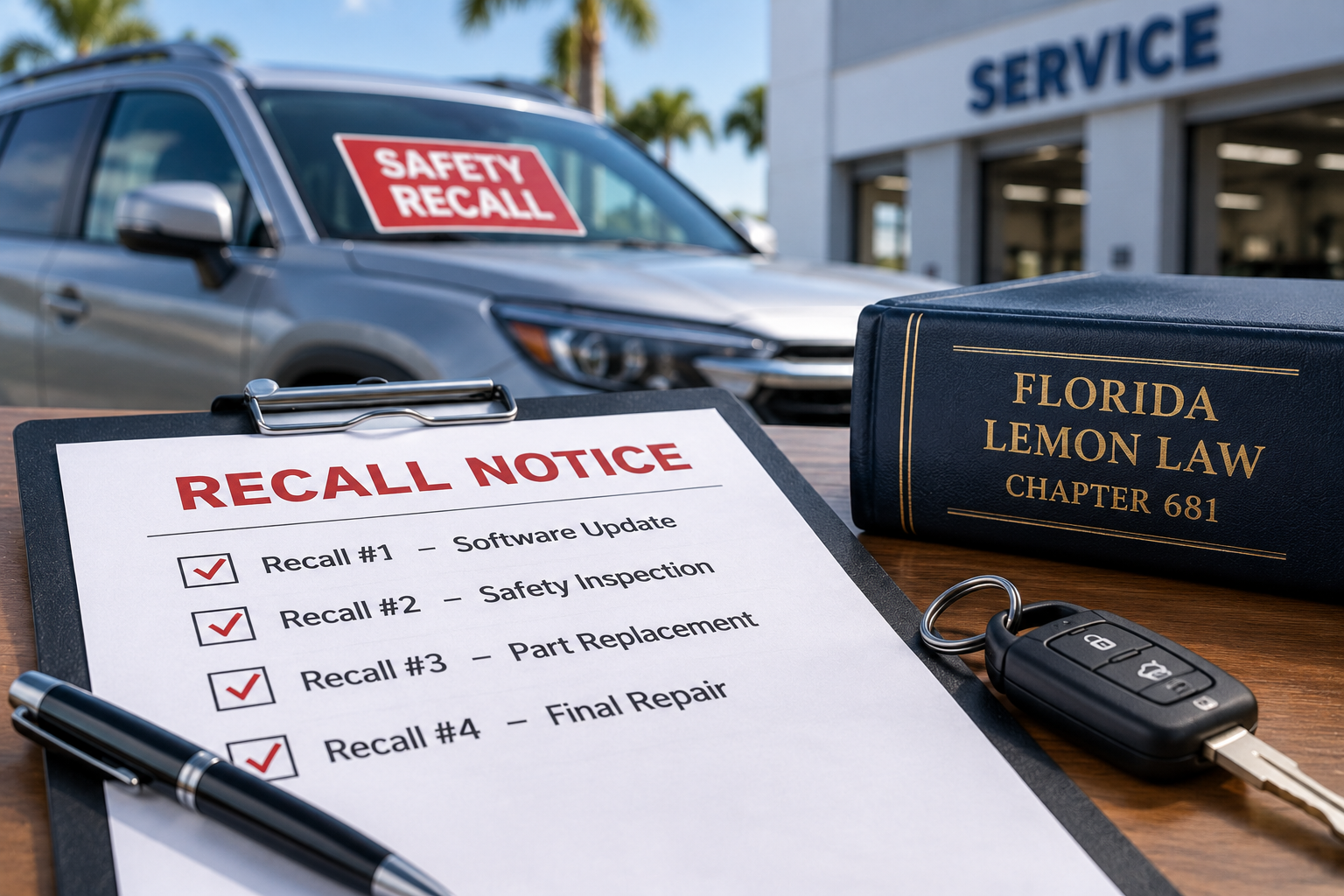
    You open the mailbox and find another recall notice for your new car. It’s the second one this year. Maybe the third. At some point you start wondering how many recalls before lemon law protection kicks in.

    The short answer surprises most people. In Florida, there is no magic number of recalls. A recall on its own doesn’t make a car a lemon, and it doesn’t restart the 24-month clock. But a recall repair can still matter a lot, depending on what the defect is and whether the dealer actually fixes it.

    This guide walks through how recalls fit into Florida’s lemon law, in plain English. For the full picture of how the law works from start to finish, see our plain-English guide to the Florida Lemon Law.

    How Many Recalls Before Lemon Law Protection Applies?

    Florida’s lemon law is officially called the Motor Vehicle Warranty Enforcement Act. It lives in Chapter 681 of the Florida Statutes. If you read the whole chapter, you won’t find the word “recall” anywhere.

    That’s the key point. The law doesn’t count recalls. It counts repair attempts and days out of service for a defect that seriously affects the car. A recall is simply the manufacturer’s announcement that a defect exists. What the law cares about is what happens to your specific car after that.

    Key takeaway: Five recalls for five different minor issues, each fixed on the first try, generally won’t make a car a lemon. One recall defect that the dealer fails to fix again and again might.

    What Florida’s Lemon Law Actually Counts

    To see where a recall fits, it helps to know the three building blocks the law uses. Each one comes straight from the statute.

    The “Nonconformity” Test

    The law only covers a “nonconformity.” Under Fla. Stat. § 681.102, that means a defect or condition that substantially impairs the use, value, or safety of the vehicle. Damage from an accident, abuse, neglect, or aftermarket changes doesn’t count.

    Many safety recalls involve problems like stalling, brake issues, or airbags. Those can easily touch “safety.” But some recalls are for things like a mislabeled sticker or a warning chime that doesn’t sound. A defect that small may not meet the “substantially impairs” standard, and the manufacturer can raise that as a defense under section 681.104(4).

    Three Repair Attempts Plus a Final Chance

    Under Fla. Stat. § 681.104(3)(a), the law presumes the manufacturer had a reasonable number of repair attempts when the same nonconformity has been repaired at least three times, the manufacturer got a final repair attempt, and the problem still exists. All of this has to happen during the Lemon Law rights period.

    The final attempt has its own rules. After the third try, section 681.104(1)(a) calls for written notice to the manufacturer by registered or express mail. The manufacturer then has 10 days to respond, and 10 days after the car is delivered to its chosen repair shop to fix it. If it doesn’t respond or repair in time, the final-attempt requirement drops away.

    30 Days Out of Service

    The second path is time. Under section 681.104(3)(b), the presumption also applies when the car has been out of service for repair of one or more nonconformities for a total of 30 or more days. The days don’t have to be in a row, and the problems don’t have to be the same. Routine maintenance doesn’t count.

    There’s a notice step here too. Once the car hits 15 days out of service, section 681.104(1)(b) calls for written notice to the manufacturer by registered or express mail. The manufacturer must then get at least one chance to inspect or repair the car.

    When a Recall Repair Counts Toward Florida’s Repair Attempts

    Here’s where recalls come back in. A trip to the dealer for recall work is still a trip to the manufacturer’s authorized service agent to fix a defect. If that defect is a nonconformity, and it’s the same problem you’ve already brought the car in for, the visit can generally be argued as a repair attempt.

    Say Tyrone buys a new Nissan Rogue in Jacksonville. Twice in his first six months, the engine stalls at red lights on Beach Boulevard, and twice the dealer can’t find the cause. Then the manufacturer issues a recall for a fuel pump that can cause stalling. Tyrone brings the car in for the recall repair, and a week later it stalls again. That recall visit looks a lot like a third attempt at the same stalling problem.

    Now compare Brianna in Orlando. Her new Honda Accord gets three recall notices in a year: one for a software update to the backup camera, one for a trunk latch bolt, and one for a seat belt warning label. Each is fixed on the first visit. That’s three recalls, but three different issues that were each resolved. On those facts, the three-attempt path generally wouldn’t be met.

    Heads up: Chapter 681 doesn’t directly address recall visits. Whether a particular recall repair counts as an attempt is decided case by case, often by the state arbitration board. What the repair orders say can make a big difference.

    What About a Recall With No Fix Available Yet?

    Sometimes a manufacturer announces a recall before parts are ready. If the dealer keeps the car because it’s unsafe to drive, those days may count toward the 30-day total, since the car is out of service because of the defect. If the car stays in your driveway waiting for parts, the answer is less clear. The statute counts days out of service “by reason of repair,” and a car that was never dropped off is harder to fit into that language.

    Picture Ana in Hialeah. Her new SUV gets a do-not-drive recall for a fuel leak in month 11. The dealer tows it in and holds it for 34 days waiting on parts. Those 34 days in the shop are the kind of time section 681.104(3)(b) is built to capture, as long as the notice steps are followed.


    Does a Recall Restart the 24-Month Lemon Law Period?

    No. Under section 681.102, the Lemon Law rights period ends 24 months after the car was first delivered to a consumer. It’s a fixed window tied to the delivery date. Nothing in the chapter pauses or restarts it when a recall is announced.

    There is one related rule worth knowing. Under Fla. Stat. § 681.103(1), if you first report a problem during the 24 months, the manufacturer still has to fix it even if the repair happens after the period ends. But that same section says it doesn’t extend the rights period or the time to file a claim.

    24 months + 60 days: Under Fla. Stat. § 681.109(4), a request for arbitration before the state board generally has to be made no later than 60 days after the rights period ends, or 30 days after a manufacturer’s certified program finishes, whichever is later.

    So think about Kevin in Fort Myers. A recall comes out in month 26 for a transmission defect. If Kevin never reported a transmission problem during his first 24 months, the recall alone doesn’t open a new lemon law window for him. The recall repair itself is still free under federal law, which we’ll cover next.

    Federal Recall Remedy vs. Florida Lemon Law Remedy

    Recalls are a federal system run through the National Highway Traffic Safety Administration. Under 49 U.S.C. § 30120, the manufacturer has to remedy a recalled defect free of charge. But the manufacturer picks the remedy. It can repair the car, replace it, or refund the price minus a reasonable allowance for depreciation. In practice, most recalls end in a repair.

    Florida’s lemon law works differently. When a car can’t be fixed after a reasonable number of attempts, section 681.104(2)(a) requires the manufacturer to repurchase or replace it within 40 days. And the consumer, not the manufacturer, has an unconditional right to choose a refund over a replacement. A refund is reduced by a “reasonable offset for use,” which is a mileage-based formula spelled out in section 681.102.

    The two systems also cover different cars. A federal recall applies to every affected vehicle, new or used. Florida’s lemon law covers new vehicles, demonstrators, and certain leases sold in Florida, plus people who acquire the car during the original 24-month window. The statute also says it doesn’t limit rights you may have under other laws, so a recall and a lemon law claim can exist side by side.

    Some states give a shorter path when a defect could cause death or serious injury, counting fewer repair attempts. Florida’s statute has no special shortcut for safety defects. A serious safety recall still runs through the same three-attempt and 30-day rules.

    A Hypothetical Walkthrough: Denise’s SUV in Tampa

    Denise buys a new Toyota Highlander from a dealer on Dale Mabry Highway in Tampa. The price is $44,000. Here’s how a recall could play into her situation, step by step.

    In month 4, her brakes feel soft and the warning light flickers. The dealer bleeds the lines. In month 7, it happens again, and the dealer replaces a sensor. In month 9, the manufacturer recalls her model for a brake booster defect that causes the same symptoms. The dealer does the recall repair, and the repair order notes “customer reports soft brake pedal.”

    Two weeks later, the soft pedal is back. On these facts, Denise’s car has arguably had three repair attempts for the same nonconformity, and one of them was the recall. The next step under the statute would be written notice to the manufacturer by registered or express mail, giving it a final chance to fix the brakes.

    If the final repair fails, the presumption kicks in. If Denise had driven 12,000 miles by the time of settlement or hearing, the offset formula would work out to roughly 12,000 times $44,000, divided by 120,000. That’s about $4,400 off her refund, before collateral and incidental charges are added back in. (The formula uses the base price on the purchase invoice, not taxes or dealer fees, so the real figure depends on her paperwork.)

    How the Florida Process Generally Works

    Florida routes most lemon law disputes through a state arbitration program before any lawsuit. Here’s the general order of events under Chapter 681.

    1. The defect is reported to the manufacturer or dealer during the 24-month rights period.
    2. The repair attempts or days out of service add up, with the written notices the statute describes.
    3. If the manufacturer has a state-certified dispute program, the claim generally goes there first.
    4. The dispute goes to the Florida Attorney General’s Lemon Law Arbitration Division, which screens it for the Florida New Motor Vehicle Arbitration Board.
    5. The board hears the case within 40 days and decides within 60 days of approval, under Fla. Stat. § 681.1095(6).
    6. Either side can appeal to circuit court within 30 days of receiving the decision.

    Under section 681.1095(4), a consumer generally must go through the Attorney General’s office before filing a lawsuit on these claims. Section 681.112 then sets a one-year window for filing suit, measured from the end of the rights period or from the final action of the arbitration process.

    Paperwork matters throughout. Section 681.103(4) requires the dealer to hand over an itemized repair order every time the car comes back, showing the reported problem, the work done, the dates, and the mileage. For recall visits, those orders are often what shows whether the recall fixed the same problem you’d already complained about.

    Common Questions About Recalls and Florida Lemon Law

    Does a recall automatically make my car a lemon?

    No. Millions of cars are recalled every year, and most are fixed on the first try. Florida’s law looks at whether a substantial defect survived a reasonable number of repair attempts, not at how many recall notices went out.

    How many repair attempts before lemon law applies in Florida?

    The statute presumes a reasonable number of attempts after three repairs of the same nonconformity plus a final attempt by the manufacturer, or after 30 total days out of service. Both have to happen within the first 24 months.

    Can I get a refund just because my car was recalled?

    Under federal recall law, the manufacturer decides whether to repair, replace, or refund, and it usually repairs. A refund you get to choose comes from the lemon law, which has its own requirements.

    Does Florida lemon law cover recalls on used cars?

    Florida’s lemon law is built for new vehicles. A used car can still be covered if it changed hands during the original owner’s 24-month window. Recall repairs, though, are free on used cars too, and you can look up open recalls by VIN or plate at NHTSA’s recall lookup tool.

    Do recall repairs count toward the 30 days out of service?

    They can, if the recall defect is a nonconformity and the car was actually in the shop for that repair. Time the car spends parked at home waiting for parts is a harder argument.

    The Bottom Line

    There’s no set number of recalls that turns a car into a lemon in Florida. What counts is whether a substantial defect keeps coming back after repeated repairs, or keeps the car in the shop for 30 days, all within the fixed 24-month window. A recall repair can be one of those attempts when it targets the same problem.

    This article is for educational purposes only and is not legal advice. Reading it does not create an attorney-client relationship. For advice on your specific situation, consult a licensed attorney in your state.
  • Is There a 30-Day Lemon Law in Florida? The Real Rule

    Is There a 30-Day Lemon Law in Florida? The Real Rule

    Is There a 30-Day Lemon Law in Florida? The Real Rule

    People search “is there a 30-day lemon law in Florida” for one of two reasons. Either they just bought a car they already regret, or their new car has spent most of the last two months sitting at the dealership. Those are very different problems, and Florida law treats them very differently.

    Here’s the short version. Florida has no law that lets you return a car within 30 days because you changed your mind. There is no 30-day return window, and there’s no 3-day one either. Both of those are myths that get repeated on car forums and in dealership parking lots all over the state.

    What Florida does have is a 30-day number buried inside its lemon law. It has nothing to do with returns. It’s a way of proving that a manufacturer got enough chances to fix a broken new car. This article walks through what that number actually does.

    The short answer: Florida’s “30 days” is a cumulative repair-shop count that helps trigger a manufacturer buyback on a new vehicle. It is not a 30-day return policy, and it does not apply to buyer’s remorse.

    Where the “30-day lemon law” idea comes from

    Florida’s lemon law is officially the Motor Vehicle Warranty Enforcement Act, found at Chapter 681, Florida Statutes. Tucked inside it is a rule that says 30 days in the shop can be enough to prove a car is a lemon.

    Somewhere along the way, “30 days in the shop” got shortened to “30-day lemon law.” Then it got twisted again into “you have 30 days to return a car.” That last version isn’t real anywhere in Florida law.

    The actual rule lives in Fla. Stat. § 681.104. It’s a presumption, which is a legal shortcut. It doesn’t hand anyone a refund on day 30. It shifts the burden by saying the manufacturer has had a reasonable number of chances to get the car right.

    What Florida’s 30-day out-of-service rule actually says

    Under section 681.104(3)(b), the presumption applies when a vehicle has been out of service for repair of one or more nonconformities for a cumulative total of 30 or more days. For recreational vehicles the number is 60 days. Downtime for routine maintenance listed in the owner’s manual doesn’t count toward the total.

    Two words there do a lot of work. “Cumulative” means the days don’t have to run back to back. Three separate visits of ten days each get you to the same place as one thirty-day stretch.

    “Nonconformity” is defined in Fla. Stat. § 681.102 as a defect or condition that substantially impairs the use, value, or safety of the vehicle. A rattling cupholder isn’t going to qualify. A transmission that drops out of gear on I-4 is a different conversation.

    The 15-day letter comes first

    This is the part most articles skip. The 30-day count doesn’t stand on its own. Section 681.104(1)(b) says that once the vehicle has been out of service for repair for a cumulative total of 15 or more days, the consumer notifies the manufacturer in writing by registered or express mail.

    That letter gives the manufacturer or its service agent a chance to inspect or repair the vehicle. The statute requires that the manufacturer have had at least one such opportunity after receiving the notice before the 30-day presumption kicks in.

    Common trap: Notice goes to the manufacturer, not the dealership. A service advisor knowing about the problem is not the same thing as the manufacturer receiving written notice under section 681.104.

    The other road: three repair attempts

    The 30-day count isn’t the only path. The presumption also applies when the same nonconformity has been subject to repair at least three times, plus a final attempt by the manufacturer, and the problem still exists.

    After three attempts at the same defect, written notice by registered or express mail goes to the manufacturer. The manufacturer then has 10 days to respond and offer a repair facility, and 10 more days to fix the car once it’s delivered. For recreational vehicles, that final repair window stretches to 45 days.

    How the 30 days adds up: a Tampa example

    Say Marisol buys a new crossover from a dealership off Dale Mabry in Tampa in January. The base sale price on her purchase invoice is $32,000. By March the transmission shudders every time she merges, and the car goes in for 12 days.

    It comes back. It shudders again in May and sits for another 9 days. That puts her at 21 cumulative days, past the 15-day mark, so she sends written notice to the manufacturer by registered mail. The manufacturer arranges another look. The car goes back in during July for 11 more days and still shudders.

    Marisol is now at 32 cumulative days inside the 24-month Lemon Law rights period, with the manufacturer having had a post-notice opportunity. Under section 681.104(3)(b), a reasonable number of attempts is presumed. Note what did not happen. Nobody handed her keys back on day 30 and wrote a check. The presumption is a starting position in a dispute, not an automatic refund.

    How the offset math works: If a manufacturer repurchases the vehicle, the refund is the full purchase price less a reasonable offset for use. Section 681.102 sets that offset as miles driven up to the settlement or hearing, times the base price, divided by 120,000. On Marisol’s $32,000 crossover at 9,000 miles, that’s 9,000 x $32,000 / 120,000, or $2,400.

    Florida’s Lemon Law rights period and the hurricane clause

    All of this has to happen inside what Florida calls the Lemon Law rights period. Section 681.102 defines it as the period ending 24 months after the original delivery of the vehicle to the consumer. Not 24 months from the model year, and not from when the problem started.

    Florida added something most states didn’t. The statute says the 30-day period can be extended by any time during which repair services aren’t available because of war, invasion, strike, fire, flood, or natural disaster. In a state that loses weeks of dealership service capacity to hurricanes some years, that clause earns its keep.

    Other states pick their own numbers for days out of service, which is part of why advice you read online often doesn’t match what Florida actually requires. Federal law doesn’t set a day count at all. There’s no federal lemon law that forces a buyback, so the 30-day figure is purely a creature of Chapter 681.

    The 3-day right to cancel a car purchase in Florida

    This myth is the 30-day myth’s cousin, and it comes from a real rule that just doesn’t cover cars.

    The federal cooling-off rule, 16 C.F.R. Part 429, gives buyers until midnight of the third business day to cancel certain sales. The catch is location. It applies to sales made at a home, a workplace, or a temporary spot like a hotel conference room. A permanent dealership isn’t any of those.

    Florida has its own version at Fla. Stat. § 501.025, which gives a buyer the right to cancel a home solicitation sale until midnight of the third business day. Same idea, same limit. It’s aimed at the salesperson who shows up at your door, not the showroom on a Saturday.

    So picture Tanya signing for a sedan at a lot in Jacksonville on a Saturday afternoon. By Monday she’s decided the payment is too high. Neither the federal rule nor section 501.025 reaches her purchase. Whether she has any way out depends entirely on what her contract says or what the dealer chooses to offer.

    A return policy at a Florida dealership, when one exists at all, is a business decision written into the paperwork. It isn’t a right granted by statute.

    Used car problems within 30 days in Florida

    This is where a lot of Florida searches land, and the answer is narrower than people hope. Section 681.102 defines a covered motor vehicle as a new vehicle, and the definition reaches demonstrators and certain leased vehicles. The Florida Attorney General’s office puts it plainly on its vehicle coverage page. Florida’s Lemon Law applies to new or demonstrator vehicles sold or leased in the state.

    An ordinary used car off an independent lot doesn’t fall under Chapter 681. Neither do motorcycles, mopeds, off-road vehicles, trucks over 10,000 pounds gross vehicle weight, or the living quarters of an RV.

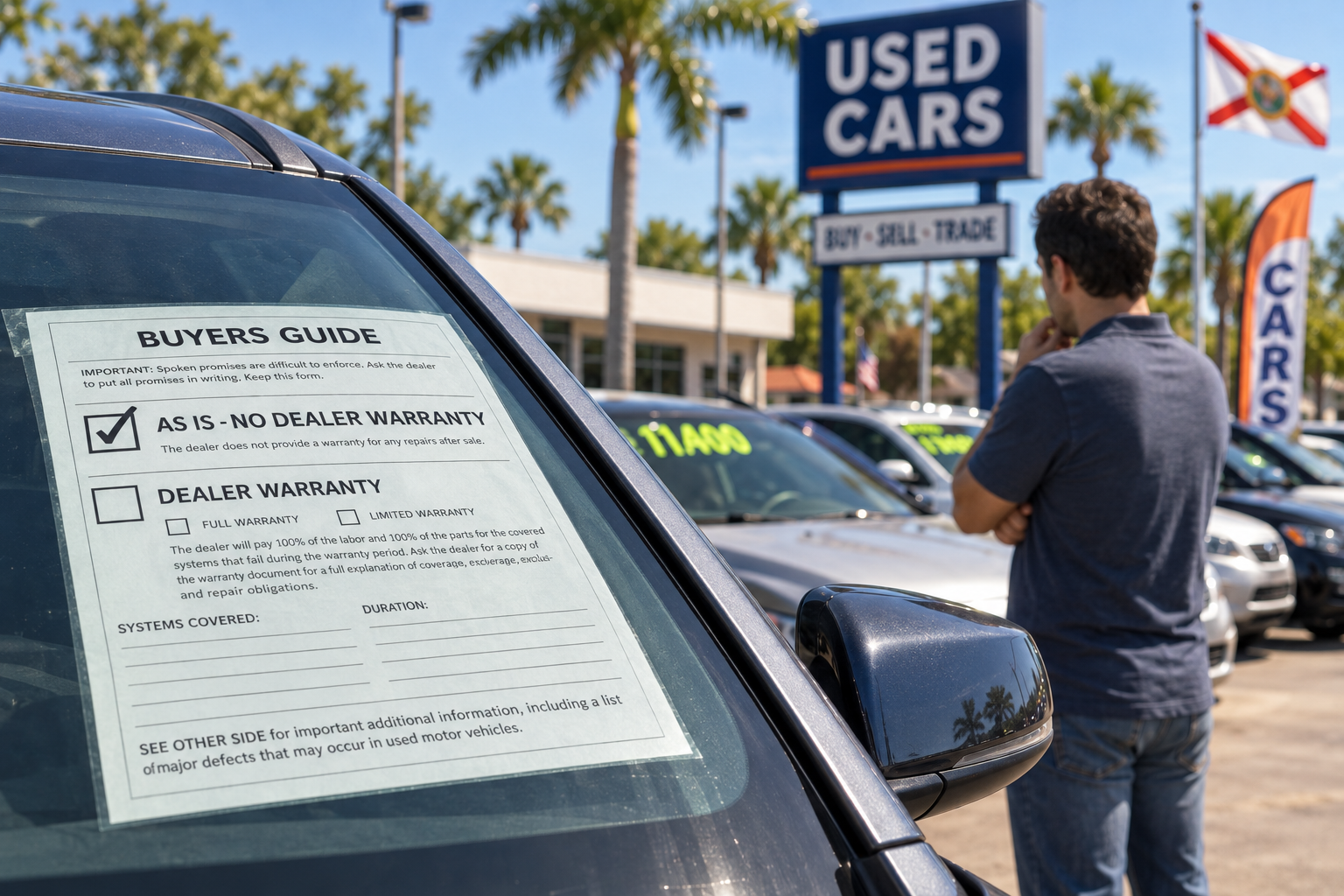
    So when Dwayne buys a nine-year-old sedan on Colonial Drive in Orlando and the check engine light comes on during week two, the 30-day out-of-service rule isn’t in play. What may matter instead is the federal Buyers Guide the dealer had to display, which the FTC explains in its guide to buying a used car from a dealer. That sticker says whether the car came with a warranty or was sold “as is,” and it becomes part of the sales contract.

    Used car buyers in Florida aren’t without any law at all. Remaining factory warranty coverage, written dealer warranties, federal warranty law, and Florida’s deceptive trade practices statute all exist in the background. They just operate on different rules than the lemon law does.

    Where Florida lemon law disputes get decided

    Florida routes these cases through arbitration before court. The Attorney General’s Lemon Law Arbitration Division screens disputes and, when eligible, sends them to the Florida New Motor Vehicle Arbitration Board.

    The Board is created by section 681.1095. Panels of three members hear cases in locations around the state, from Pensacola to Miami, so consumers don’t have to fly to Tallahassee. A majority vote decides the outcome, and the result is either a refund, a replacement vehicle, or a dismissal.

    Timing is unforgiving. Section 681.109 requires a request for arbitration no later than 60 days after the Lemon Law rights period expires. Section 681.112 requires any civil action to be commenced within one year after that period ends, or within a year after final action by the Board. A Board decision can be appealed to circuit court within 30 days, and that appeal is a trial de novo.

    Common questions about the 30-day lemon law in Florida

    Is there a 30-day lemon law on used cars in Florida?

    No. Chapter 681 covers new and demonstrator vehicles. The 30-day out-of-service presumption is part of that chapter, so it doesn’t extend to a standard used car purchase.

    Do the 30 days have to be in a row?

    No. The statute uses the word cumulative. Separate repair visits add up across the Lemon Law rights period.

    Does an oil change count toward the 30 days?

    The count covers days out of service by reason of repair of a nonconformity. Downtime for routine maintenance prescribed by the owner’s manual is expressly excluded. How a specific service visit gets characterized is decided case by case.

    Can you return a car in Florida within three days?

    Not as a general right. The federal cooling-off rule and section 501.025 both target sales made away from a seller’s permanent place of business. A dealership sale sits outside both.

    What happens once the 30-day presumption applies?

    Section 681.104(2) says that when a manufacturer can’t conform the vehicle after a reasonable number of attempts, it has 40 days to repurchase and refund the purchase price less a reasonable offset for use, or replace the vehicle. The statute gives the consumer an unconditional right to choose the refund over a replacement.

    The bottom line on Florida’s 30-day rule

    Florida’s 30-day figure is a proof standard for new vehicles that keep breaking, not a return window for cars people regret buying. It works alongside a 15-day notice requirement, a 24-month rights period, and an arbitration system run out of the Attorney General’s office.

    If you want the full picture of how the statute fits together, our Florida lemon law guide in plain English covers coverage, notice, remedies, and deadlines in one place.

    This article is for educational purposes only and is not legal advice. Reading it does not create an attorney-client relationship. For advice on your specific situation, consult a licensed attorney in your state.
  • Does Lemon Law Apply to Used Cars with No Warranty in Florida?

    Does Lemon Law Apply to Used Cars with No Warranty in Florida?

    Does the Lemon Law Apply to Used Cars With No Warranty in Florida?

    Say Marcus buys a 2019 Nissan Altima for $11,400 from a small used car lot on Semoran Boulevard in Orlando. The Buyers Guide on the window has a check mark next to “As Is.” Nine days later, the transmission starts shuddering every time he pulls away from a red light.

    Marcus has the same question thousands of Florida drivers type into a search bar. Does the lemon law apply to used cars with no warranty? In most cases, Florida’s Lemon Law says no. But that isn’t the end of the story, because federal warranty law, Florida’s title disclosure rules, and the state’s dealer practices statute can still come into play.

    For how the statute works on new cars, see our plain-English guide to the Florida Lemon Law.

    Does Florida’s Lemon Law Cover Used Cars?

    Florida’s Lemon Law is officially called the Motor Vehicle Warranty Enforcement Act, and it lives in Chapter 681 of the Florida Statutes. It was written with new vehicles in mind. Under the definitions in Fla. Stat. § 681.102, a “motor vehicle” means a new vehicle sold in Florida, along with certain demonstrator and leased vehicles.

    The law also targets the manufacturer, not the dealer. The warranty it enforces is the manufacturer’s written warranty, and statements made by the dealer are specifically left out. For a typical used car that’s several years old, Chapter 681 won’t provide a refund or a replacement.

    Key takeaway: “No warranty” on a used car sticker usually means no dealer warranty. It doesn’t automatically mean the manufacturer’s original warranty is gone, and it doesn’t switch off federal warranty law or Florida’s disclosure rules.

    When a Used Car Can Still Qualify Under Chapter 681

    There’s one big exception. Florida defines a “consumer” to include anyone the car is transferred to for personal, family, or household use during the Lemon Law rights period, which ends 24 months after the car was first delivered to its original owner. Section 681.115 adds that Chapter 681 rights extend to later owners, and any agreement waiving those rights is void. An “As Is” sticker from a used car dealer doesn’t cancel the manufacturer’s obligations.

    The clock doesn’t restart when the car is sold. The defect generally has to be reported to the manufacturer or its authorized service agent inside the original 24 months, and the factory warranty has to cover the problem. Because the definition refers to a new vehicle “sold in this state,” a car first sold new in another state can raise extra questions.

    Picture Priya, who buys a 2025 Toyota RAV4 “As Is” from a used car lot on Philips Highway in Jacksonville in August 2026. The RAV4 was first sold new in Florida in March 2025, and its factory warranty is still active. When the engine starts stalling on I-95, she’s still inside a rights period that runs until March 2027, so Chapter 681 may still apply.

    24 months

    Florida’s Lemon Law rights period, measured from the car’s original delivery

    90 days

    Federal window in which a seller’s service contract can block an “As Is” disclaimer

    12,000 miles

    Or 1 year, whichever comes first. The manufacturer warranty required on a resold lemon law buyback

    What “As Is” Means Under Florida Law

    When a business sells goods it regularly deals in, the sale usually comes with an unwritten promise called the implied warranty of merchantability. In plain terms, it’s a promise that the product is fit for its ordinary purpose.

    Florida lets sellers get rid of that promise. Under Fla. Stat. § 672.316, words like “as is” or “with all faults” generally exclude all implied warranties, unless the circumstances indicate otherwise. Under Fla. Stat. § 501.976, a dealer’s disclaimer also has to be in writing, conspicuous, and in lay terms.

    Florida doesn’t have a separate used car lemon law. So for Marcus, the “As Is” box generally means the dealer made no implied promise about the transmission. Unless another rule applies, the repair bill usually falls on him.

    The FTC Buyers Guide on Florida Used Car Lots

    That “As Is” box comes from a federal regulation. The FTC Used Car Rule, 16 C.F.R. Part 455, requires dealers to post a Buyers Guide on the used vehicles they offer for sale. It generally covers any seller who has sold or offered five or more used vehicles in the previous 12 months. The guide shows which warranty setup applies:

    • As Is (No Dealer Warranty). The dealer offers no warranty and disclaims implied warranties.
    • Implied Warranties Only. The dealer makes no written promises, but implied warranties under state law still apply.
    • Dealer Warranty (Full or Limited). The dealer gives a written warranty, and the guide lists the covered systems, how long coverage lasts, and what share of repair costs the dealer pays.

    The final Buyers Guide becomes part of the sales contract and overrides anything contrary in it. If a sale is conducted in Spanish, as happens every day from Hialeah to Kissimmee, the guide must be in Spanish too.

    Private sales work differently. The Used Car Rule applies to dealers, not to a neighbor selling a car through an online classified ad. Florida’s implied warranty of merchantability also generally depends on the seller being a merchant who deals in that kind of goods, so a one-time private seller usually isn’t making that promise.

    How the Magnuson-Moss Warranty Act Can Undo an “As Is” Sale

    The federal Magnuson-Moss Warranty Act is where a lot of no-warranty situations get interesting. Under 15 U.S.C. § 2308, a seller can’t disclaim implied warranties if it gives the buyer a written warranty, or if it enters into a service contract with the buyer at the time of sale or within 90 days after. A disclaimer that breaks this rule is ineffective under both federal and state law.

    Service Contracts and Short Dealer Warranties

    Plenty of “As Is” cars leave the lot with an extended service contract folded into the finance paperwork. If the dealer itself is a party to that contract, federal law can bring the implied warranty of merchantability back, even with the “As Is” box checked. Many are issued by third-party companies, though, and courts look closely at whether the dealer entered into the contract or just sold it.

    A short dealer warranty counts too. Coverage like “30 days or 1,000 miles” on the engine and transmission is still a written warranty, although the dealer can limit implied warranties to that same length if the limit is conscionable and clearly and prominently stated.

    Under 15 U.S.C. § 2310, a consumer can sue over a seller’s failure to honor a written warranty, an implied warranty, or a service contract, and a court may award attorney’s fees to a consumer who wins. These claims can go to Florida county court or circuit court. The Act only opens the door to federal district court when the amount in controversy is at least $50,000.

    Florida’s Used Vehicle Disclosure Rules

    Even when a car is sold “As Is,” Florida doesn’t let sellers hide certain history. Under Fla. Stat. § 319.14, a person can’t knowingly sell a vehicle with certain past uses or conditions unless the title carries a brand and the buyer gets written disclosure before the sale. The categories include:

    • Former taxicabs, police vehicles, and short-term lease vehicles like rental cars
    • Rebuilt vehicles built from salvage
    • Flood vehicles declared a total loss because of water damage
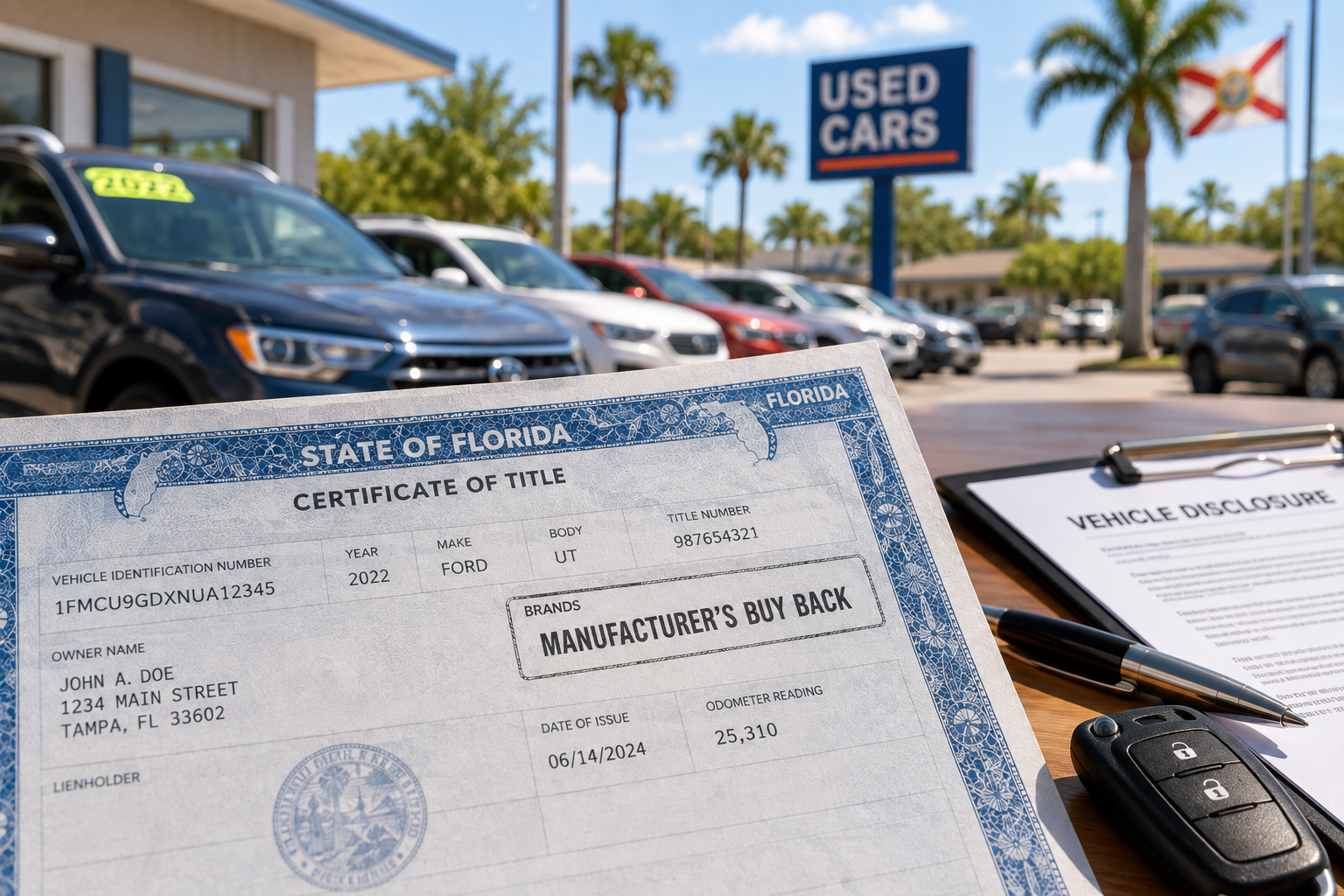
    • Florida lemon law buybacks, which carry a “Manufacturer’s Buy Back” title brand

    Ads for these vehicles have to disclose the history too, though the statute carves out some privately owned former lease cars and older buybacks.

    Resold Lemons Come With a Required Warranty

    Under section 681.114, a vehicle returned under Florida’s Lemon Law, or a similar law in another state, can’t be knowingly resold unless the defect is clearly disclosed and the manufacturer warrants to fix it for 1 year or 12,000 miles, whichever comes first.

    Say Ray buys a 2023 Ford Explorer in Tampa that, unknown to him, was bought back under Georgia’s lemon law over a recurring electrical problem. Because section 681.114 reaches buybacks under other states’ laws, that’s where the analysis would start. The Florida Attorney General also publishes a list of vehicles reported as bought back under Florida’s Lemon Law, though the office notes it isn’t complete.

    When What the Dealer Said Matters More Than the Sticker

    An “As Is” disclaimer covers warranties. It doesn’t give a dealer permission to mislead. Section 501.976 lists dealer practices that are actionable under the Florida Deceptive and Unfair Trade Practices Act, including:

    • Misrepresenting a vehicle’s previous use or status
    • Describing a car’s condition or service history unless the dealer knows it’s true and can back it up
    • Saying a car has no structural damage unless the statement is made in good faith after an inspection
    • Misrepresenting warranty coverage

    Under Fla. Stat. § 501.211, a person who suffers a loss from a violation can recover actual damages, and attorney’s fees and court costs may be awarded. Under Fla. Stat. § 501.98, if the dealer gave the buyer a specific written notice at the sale, the buyer generally has to send a written demand letter at least 30 days before suing.

    Say Carla buys a 2021 Chevrolet Malibu “As Is” from a lot in Fort Myers, and the salesperson promises it has “never been in a flood.” Two months later, a mechanic finds silt and rust under the carpet, and a title check shows a flood brand. The “As Is” box doesn’t answer whether that statement, or the missing written disclosure, broke Florida law.

    Hypothetical: One Tampa Used Car, Four Legal Questions

    Angela buys a 2020 Jeep Grand Cherokee with 68,000 miles for $19,500 from a used car lot on Dale Mabry Highway in Tampa. The Buyers Guide has “As Is” checked. At signing, the dealer also sells her a $2,400 service contract, and the salesperson tells her the Jeep has “no frame damage, we checked.” Five weeks later, the transmission fails and her mechanic spots a repaired frame rail.

    Under general Florida and federal law, each question would typically be analyzed like this:

    1. Does Chapter 681 apply? Probably not. A 2020 model first delivered years ago is well past the 24-month Lemon Law rights period.
    2. Did the “As Is” disclaimer hold up? It depends on the service contract. If the dealer is a party to it, the Magnuson-Moss Warranty Act generally blocks the dealer from disclaiming implied warranties.
    3. What does the paperwork say? The final Buyers Guide is part of the contract, so if the guide and the sales contract conflict, the guide controls.
    4. Was the frame statement lawful? Florida’s dealer statute bars “no structural damage” claims unless they’re made in good faith after an inspection. A claim under that section would generally begin with a written demand letter if the dealer gave the required notice.

    None of this means Angela automatically wins or loses, since each answer turns on facts that would have to be proven. The point is that “no warranty” is where the legal analysis starts, not where it ends.


    Common Questions About Used Cars With No Warranty in Florida

    Can you return a used car in Florida within 30 days?

    Not as a general rule. Florida doesn’t give buyers a cooling-off period to return a car bought at a dealership just because they changed their mind. A return right usually has to come from the contract itself or from one of the laws covered above.

    Does the lemon law apply to private sales in Florida?

    Only in a narrow situation. Chapter 681 protection follows a car to a new owner who uses it for personal purposes during the original 24-month rights period, and a private sale doesn’t change that. Outside that window, private sales usually fall outside the Used Car Rule and the implied warranty of merchantability.

    Does a certified pre-owned car count as having a warranty?

    Usually, yes. Certified pre-owned programs typically include a written warranty from the manufacturer or the dealer. A written warranty brings the Magnuson-Moss Warranty Act into play, and if the dealer is the one giving it, the dealer generally can’t also disclaim implied warranties.


    The Bottom Line

    Florida’s Lemon Law rarely covers a used car sold with no warranty, but a car still inside its original 24-month rights period can be the exception. Beyond Chapter 681, federal warranty law, the Buyers Guide, Florida’s title branding rules, and its dealer practices statute all shape what an “As Is” sale really means.

    This article is for educational purposes only and is not legal advice. Reading it does not create an attorney-client relationship. For advice on your specific situation, consult a licensed attorney in your state.
  • Lemon Title Meaning: What It Is and How Florida Handles It

    Lemon Title Meaning: What It Is and How Florida Handles It

    Lemon Title Meaning: What It Is and How Florida Handles It

    You are scrolling used car listings and one of them mentions a lemon title. Maybe the price looks too good. A lemon title generally means the manufacturer bought the car back after a dispute involving a defect or warranty nonconformity. The car is not necessarily wrecked and it is not junk, but its title history shows that it was previously repurchased by the manufacturer under a lemon law process.

    Florida handles this differently than many buyers expect. Florida does not print the words “lemon title” on the certificate of title. The state uses its own phrase, and Florida law also provides a limited route through which certain owners can later request a corrected title.

    Here is what the brand actually means, where it comes from, and what Florida law requires a seller to tell you before the deal closes.

    What a Lemon Title Actually Means

    “Lemon title” is everyday slang, not a legal term. People generally use it to describe a title showing that a manufacturer previously repurchased the vehicle under a state lemon law process.

    In Florida, the relevant category covers a vehicle purchased by a manufacturer pursuant to a settlement, determination, or decision under Chapter 681, Florida’s Lemon Law. The manufacturer then owns a vehicle with a documented history of a warranty nonconformity serious enough to result in a statutory repurchase.

    Florida requires that history to be reflected on the certificate of title so a later buyer can identify the vehicle’s prior status. That recorded history is what people commonly mean when they say lemon title, lemon law title, or buyback lemon title.

    Key takeaway: A lemon title is a title-history designation, not a description of the car’s current mechanical condition. It tells you something important about the vehicle’s past, not necessarily whether the car runs properly today.

    Florida Calls It a “Manufacturer’s Buy Back,” Not a Lemon Title

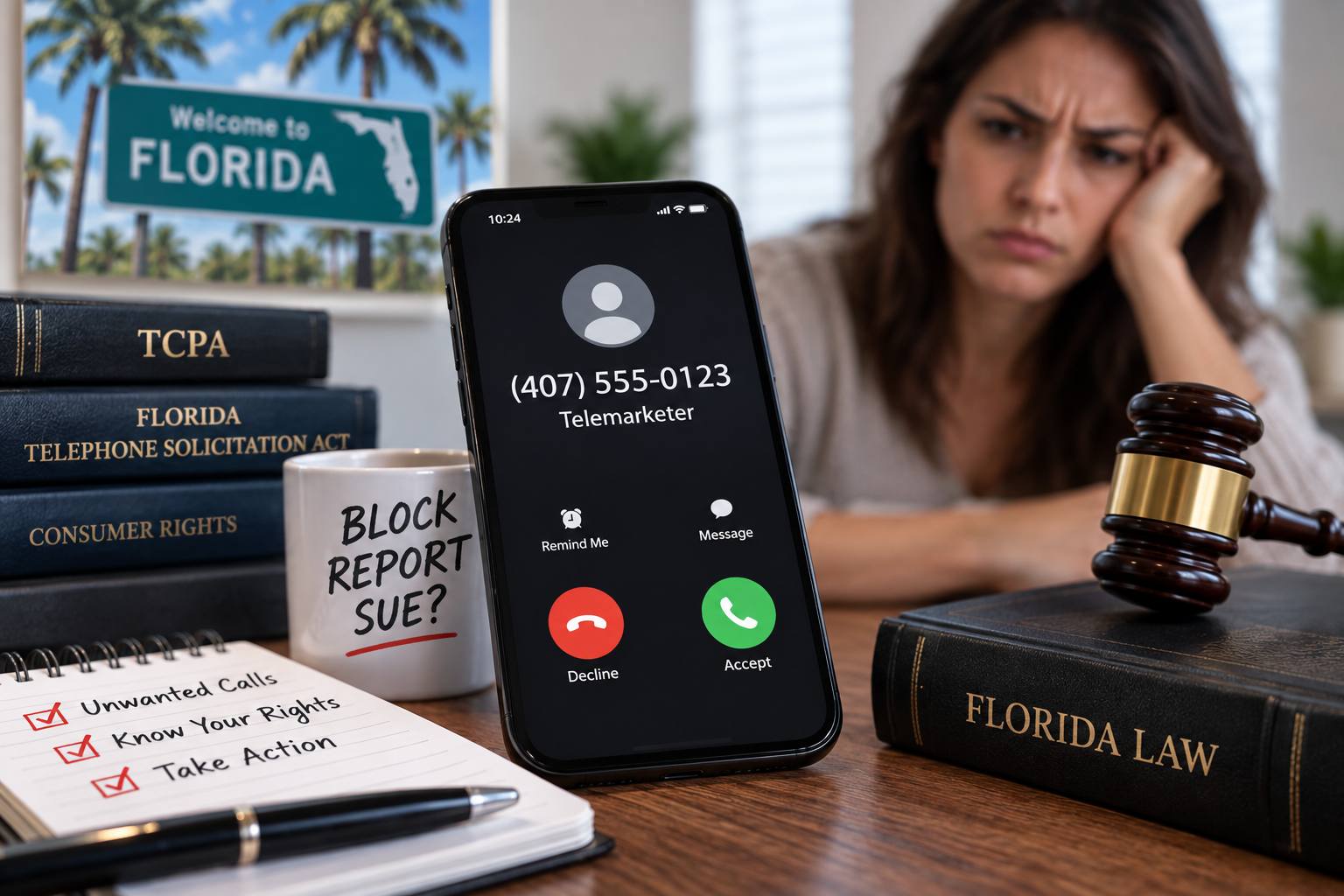
    If you are looking at a Florida title and hunting for the word “lemon,” you will not find it. Under Fla. Stat. § 319.14, the Florida Department of Highway Safety and Motor Vehicles stamps the certificate of title with the words “Manufacturer’s Buy Back” when the vehicle has been repurchased by a manufacturer pursuant to a settlement, determination, or decision under Chapter 681.

    The statute uses a formal name for these cars. It calls them nonconforming vehicles.

    Nonconforming vehicle: Under section 319.14(1)(c)9, a motor vehicle purchased by a manufacturer pursuant to a settlement, determination, or decision under Chapter 681, which is Florida’s lemon law.

    So what consumers commonly call a Florida “lemon title” is a Florida certificate of title bearing the “Manufacturer’s Buy Back” notation. The listing might use one phrase while the official Florida paperwork uses the other.

    The brand shows up on the registration too

    Section 319.14(4) says that when a title, including a foreign certificate of title, is branded to show a condition or prior use, the brand also has to appear on the registration certificate. As a general rule, the brand is then carried forward onto subsequent titles and registrations issued for the vehicle.

    That rule applies to out-of-state titles too. A car carrying a qualifying title brand in another state does not ordinarily get a clean slate simply by being titled in Florida.

    How a Car Gets a Lemon Title in the First Place

    A car does not get Florida’s Manufacturer’s Buy Back notation merely because it had a bad week at the repair shop. For purposes of section 319.14, the vehicle must have been repurchased by the manufacturer pursuant to a settlement, determination, or decision under Chapter 681. If you want the full picture of how Florida’s lemon law process actually works, that is where the repurchase comes from.

    One important part of Florida’s Lemon Law is the presumption that a manufacturer has received a reasonable number of opportunities to repair a vehicle. Under Fla. Stat. § 681.104, that presumption can arise in either of two ways during the Lemon Law rights period.

    For the repair-attempt route, the same nonconformity must have been subject to repair at least three times. The consumer then gives the manufacturer the required written notice so the manufacturer has a final opportunity to repair the vehicle. If the nonconformity continues to exist after that statutory process, the reasonable-number-of-attempts presumption may apply.

    The other route concerns time out of service. The presumption may arise when the vehicle has been out of service because of repair of one or more nonconformities for a cumulative total of 30 or more days, or 60 or more days for a recreational vehicle, provided the other statutory requirements are satisfied.

    The Lemon Law rights period is defined in Fla. Stat. § 681.102 as the period ending 24 months after the vehicle was originally delivered to a consumer. That period is important because Florida’s statutory protections and procedures are tied to when the nonconformity arises and when the required steps are taken.

    If the process ultimately results in the manufacturer repurchasing the vehicle pursuant to a qualifying settlement, determination, or decision under Chapter 681, section 319.14 requires the title to be stamped “Manufacturer’s Buy Back.”

    What a Florida Seller Has to Tell You

    Florida stacks two separate disclosure duties on top of each other, and they come from two different chapters of the statutes.

    The first is Fla. Stat. § 681.114. It says nobody may knowingly lease, sell at wholesale or retail, or transfer title to a returned vehicle unless the nature of the nonconformity is clearly and conspicuously disclosed to the prospective buyer, lessee, or transferee, and the manufacturer warrants to correct that nonconformity for one year or 12,000 miles, whichever comes first.

    That warranty is important because it applies to the disclosed nonconformity. It is not necessarily a new bumper-to-bumper warranty covering everything that could go wrong with the vehicle.

    The second disclosure requirement comes from section 319.14 itself. Subsection (2) requires written disclosure of the vehicle’s nonconforming status before the sale, exchange, or transfer is completed. Subsection (3) goes further and requires an advertisement knowingly offering the vehicle for sale or exchange to clearly and precisely state that it is a nonconforming vehicle.

    Worth knowing: Under section 319.14(6), knowingly selling, exchanging, or offering to sell or exchange a vehicle contrary to the section is a second degree misdemeanor in Florida. A violation of the advertising requirement in subsection (3) is also expressly classified as a second degree misdemeanor.

    There is also a shield built in. Section 319.14(9) says a person is not liable in a civil action arising from a violation of that section when the vehicle’s prior-use or condition designation was not noted on the title and registration certificate received by or delivered to that person, unless that person actively concealed the vehicle’s prior use or condition from the purchaser.

    Say You Are Buying a Buyback in Tampa

    Say Marcus finds a three-year-old crossover on a small lot off Dale Mabry Highway. Comparable cars are running around $24,000. This one is priced at $17,500. The salesperson says it is a manufacturer buyback and hands him a disclosure form describing a transmission fault that was repeatedly presented for repair.

    That form is not merely a courtesy. Section 681.114 requires clear and conspicuous disclosure of the nature of the nonconformity when a returned vehicle is knowingly transferred, and the manufacturer must warrant correction of that nonconformity for one year or 12,000 miles, whichever occurs first.

    Marcus examines the Florida title and sees “Manufacturer’s Buy Back” stamped on it, as section 319.14 requires for a qualifying Chapter 681 repurchase.

    Now flip the story. Say a different lot in Kissimmee advertises a similarly branded car but the ad says nothing about its nonconforming status and the required disclosure never appears. Florida law separately regulates the title notation, pre-sale written disclosure, and advertising of these vehicles. Failing to disclose the vehicle’s status is where serious legal problems can arise.

    Both names and both lots are invented for illustration.

    Can a Lemon Title Be Removed in Florida?

    This is one of the more unusual parts of Florida’s title law.

    Section 319.14 generally requires title brands to carry forward for the life of the vehicle. But subsection (10) creates a specific exception for certain nonconforming vehicles and permits an eligible private-use owner to request a corrected certificate of title.

    The statute applies to the transfer of a nonconforming vehicle “with 36,000 or more miles on its odometer, or 34 months whichever is later” once ownership has been transferred to an owner for private use. The owner shown on the certificate of title may then request a corrected certificate that does not contain the nonconforming-vehicle statement.

    36,000 miles and 34 months matter under Florida’s corrected-title provision, but the statutory wording is unusual. Section 319.14(10) literally uses the phrase “36,000 or more miles on its odometer, or 34 months whichever is later.” Because the provision compares a mileage threshold with a time threshold using “whichever is later,” it is better to use the statute’s language rather than turn it into a simpler rule the Legislature did not expressly write.

    Two other things are worth understanding. First, getting a corrected title is not automatic. The titled private-use owner must request it from the department.

    Second, section 319.14(10) expressly lifts the requirements of subsections (1), (2), and (3) under the circumstances it describes. Section 681.114 is a separate statute and independently regulates the knowing transfer of returned vehicles. Nothing in section 319.14(10) expressly eliminates that separate Chapter 681 disclosure requirement.

    In other words, obtaining a corrected Florida title should not automatically be treated as erasing every disclosure obligation that may apply to the vehicle’s lemon-law history.

    Vehicle history reports are a separate matter entirely. A corrected state title also does not necessarily erase historical information already reported to government or commercial vehicle-history databases.

    What a Lemon Title Does to a Car’s Value

    A manufacturer-buyback history can make a vehicle less valuable than an otherwise comparable vehicle with a clean title history.

    The reason is straightforward. Some buyers will not consider a manufacturer buyback at all. Financing can also be more difficult depending on the lender, and selling the vehicle later may be harder because prospective buyers may place significant weight on its history.

    The flip side in Florida is the one-year or 12,000-mile warranty required by section 681.114 on the disclosed nonconformity. That protection is real, but it is tied to correction of the disclosed problem rather than functioning as a blanket warranty against every future mechanical issue.

    How to Check for a Lemon Title Before You Buy in Florida

    The vehicle’s history may appear in several places. Before buying, check:

    • The certificate of title for a “Manufacturer’s Buy Back” notation.
    • The registration certificate for the corresponding brand.
    • The written disclosures provided by the seller.
    • The advertisement for disclosure of the vehicle’s nonconforming status.
    • NMVTIS, the federal title-information system that collects vehicle title and brand information reported by participating sources.
    • A commercial vehicle history report run against the VIN.

    A price far below comparable listings with no explanation attached is worth a second look at the paperwork.

    Common Questions About Lemon Titles in Florida

    Is a lemon title the same as a salvage title?

    No. They come from completely different events.

    A salvage or rebuilt title generally concerns a vehicle’s damage or total-loss history. Florida’s Manufacturer’s Buy Back designation concerns a vehicle repurchased by its manufacturer pursuant to a qualifying settlement, determination, or decision under Chapter 681.

    Section 319.14 addresses multiple kinds of title brands, but the brands describe different histories and should not be treated as interchangeable.

    Should I buy a car with a lemon title?

    That is a personal decision and depends heavily on the particular vehicle.

    What Florida law gives you is information and some additional protection. When section 681.114 applies, the nature of the nonconformity must be disclosed and the manufacturer must warrant correction of that nonconformity for one year or 12,000 miles, whichever comes first.

    A buyer can then weigh the purchase price against the vehicle’s repair history, current condition, remaining warranty protection, financing options, and potential difficulty reselling it later.

    Does a lemon title from another state carry over to Florida?

    Florida law generally prevents a vehicle from simply losing a title brand by crossing state lines. Section 319.14(4) expressly addresses foreign certificates of title and provides for qualifying brands to be carried forward onto Florida title and registration documents.

    Section 681.114 also defines returned vehicles to include certain vehicles returned under a similar statute of another state, meaning Florida’s disclosure protections are not necessarily limited to vehicles originally repurchased under Florida law.

    Do lemon law rights pass to the next owner?

    Florida law does provide protection for subsequent owners, but there is an important limitation.

    Fla. Stat. § 681.115 states that the rights set forth in Chapter 681 extend to a subsequent transferee of the motor vehicle. It also makes agreements that waive, limit, or disclaim those statutory rights void as contrary to public policy.

    But transferring the vehicle does not start a brand-new Lemon Law rights period. Florida defines that period by reference to the vehicle’s original delivery to a consumer. A later buyer therefore should not assume that purchasing a manufacturer buyback gives them a fresh 24 months of Florida Lemon Law rights.

    What does “lemon title issued” mean on a report?

    It generally means that a state motor vehicle agency recorded a lemon-law or manufacturer-buyback designation against that VIN.

    The exact terminology varies by state. A national vehicle-history report might use a general phrase such as “lemon title issued,” while the corresponding Florida certificate of title uses the statutory wording “Manufacturer’s Buy Back.”

    The Short Version

    A lemon title generally means a manufacturer previously repurchased the vehicle through a lemon-law process. Florida uses the title notation “Manufacturer’s Buy Back” for vehicles repurchased pursuant to a qualifying settlement, determination, or decision under Chapter 681.

    Florida law also imposes significant disclosure requirements. Section 319.14 regulates the title notation, written disclosure, and advertising of nonconforming vehicles, while section 681.114 separately requires disclosure of the underlying nonconformity and a one-year or 12,000-mile manufacturer warranty to correct that nonconformity.

    Florida is particularly unusual because section 319.14(10) provides a limited route through which certain private-use owners can request a corrected certificate of title without the nonconforming-vehicle statement. That does not necessarily mean the vehicle’s history disappears or that every separate disclosure obligation under Chapter 681 disappears with it.

    For the broader picture of how repurchases work in the first place, see our Florida lemon law guide in plain English.

    This article is for educational purposes only and is not legal advice. Reading it does not create an attorney-client relationship. For advice on your specific situation, consult a licensed attorney in your state.
  • Can You Sue a Telemarketer in Florida? How the Law Actually Works

    Can You Sue a Telemarketer in Florida? How the Law Actually Works

    Can You Sue a Telemarketer in Florida? How the Law Actually Works

    Your phone rings four times before lunch. Two are about your car warranty. One is a recorded voice asking about solar panels. By the third week you start wondering whether any of this is legal, and whether there’s anything to be done about it.

    The short answer is that yes, people do sue telemarketers, and Florida residents have two separate laws to work with instead of one. The longer answer is that suing spam callers is harder in practice than the ads on social media make it look, and the reasons why are worth understanding before you form an opinion about your own situation.

    Here’s how both laws operate, what they pay when they work, and where these cases tend to fall apart.

    Two laws, two separate claims

    Most states have one telemarketing law that matters. Florida has two, and they don’t cover the same ground.

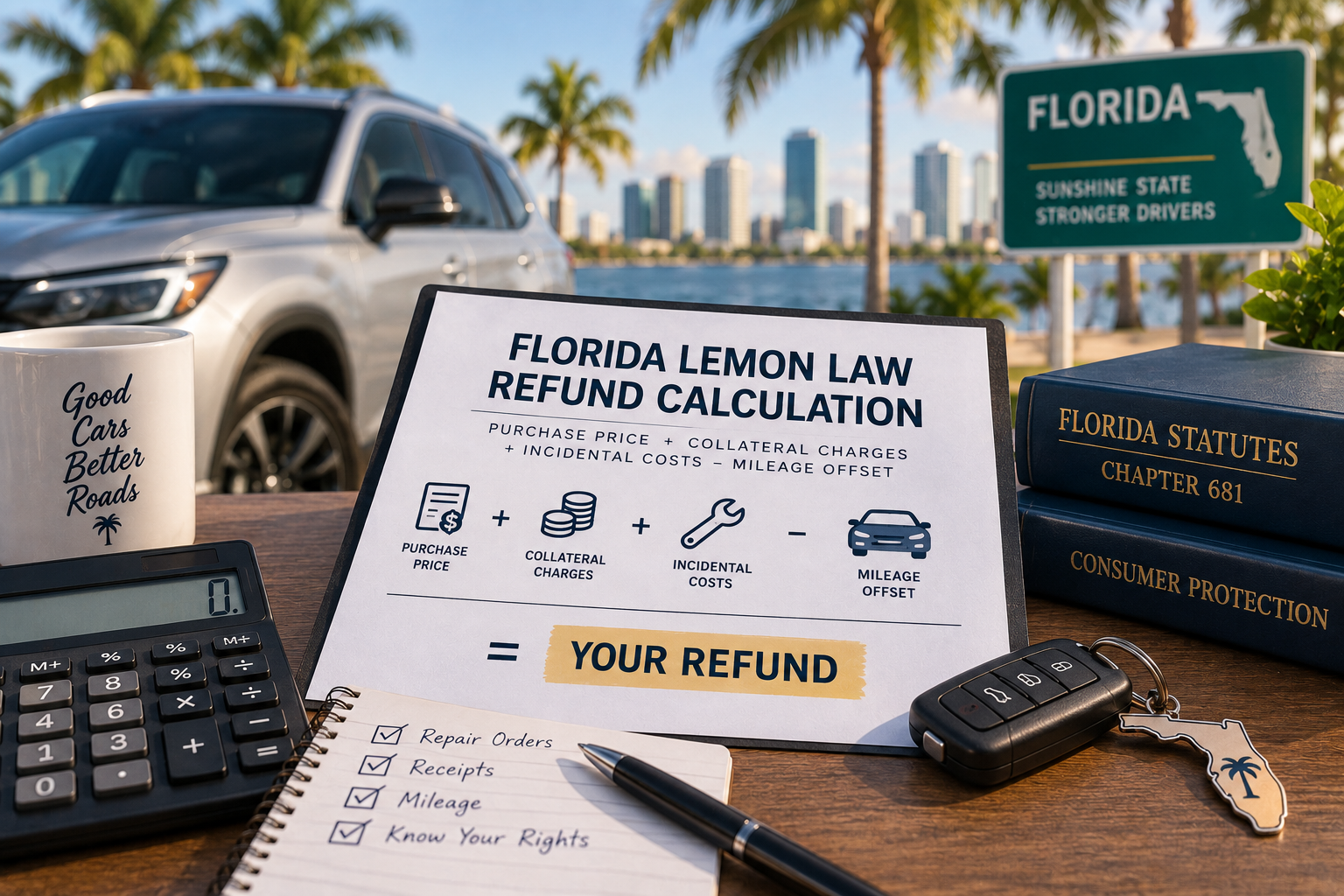
    The federal law is the Telephone Consumer Protection Act at 47 U.S.C. § 227, with the details filled in by the Federal Communications Commission at 47 C.F.R. § 64.1200. It applies everywhere in the country.

    The state law is the Florida Telephone Solicitation Act at Fla. Stat. § 501.059. People sometimes call it the Florida mini TCPA. It only covers calls and texts to people in Florida, and in some ways it reaches further than the federal law does.

    These are separate claims, not alternatives. The same phone call can violate both statutes at once, and each one carries its own damages. That stacking is the main reason Florida became a center of telemarketing litigation.

    What the federal TCPA pays, and the rule people miss

    The federal statute has two different private claims tucked inside it, and they work differently.

    Autodialer and prerecorded voice claims

    Section 227(b)(3) covers calls made with an autodialer or an artificial or prerecorded voice to a cell phone without consent. It lets a person recover actual monetary loss or $500 per violation, whichever is greater.

    If a court finds the violation was willful or knowing, it can raise that figure to as much as $1,500 per call.

    $500 per call. Up to $1,500 if willful. Those numbers are per violation, not per lawsuit, which is why a campaign of forty texts draws attention that a single call never would.

    Do not call claims, and the more-than-one-call requirement

    Section 227(c)(5) is the do not call side. It covers violations of the FCC rules on registry scrubbing, calling hours, and internal opt-out lists.

    This is where a lot of people get tripped up. The statute lets a person bring an action only after receiving more than one call within a 12-month period from the same company. One stray call, however annoying, generally isn’t enough to start a do not call claim.

    How the Florida Telephone Solicitation Act adds to it

    Florida’s own statute runs on a parallel track. Section 501.059(10) lets a called party who was hit by a violation recover actual damages or $500, whichever is greater, and a court has discretion to increase that award up to three times for a willful or knowing violation.

    The FTSA covers telephone calls, text messages, and voicemail drops. It requires written consent before a company uses an automated system to place sales calls, it bars caller ID spoofing, and it backs the state’s own do not call list.

    The STOP requirement for text messages

    In 2023 the Legislature added a gate in front of text message claims. Under section 501.059(10)(c), before anyone can sue over text solicitations, the called party has to reply STOP to the number that sent them.

    The sender then gets 15 days to stop. It’s allowed to send one confirmation text. Only if the marketing texts keep coming after those 15 days does the statute open the door to a claim.

    The attorney fee rule cuts both ways. Section 501.059(11) says the prevailing party in FTSA litigation recovers reasonable attorney fees and costs from the losing party, after judgment and after appeals are exhausted. That’s an advantage when a claim succeeds. It’s a real exposure when one doesn’t, because the consumer who loses can end up owing the company’s legal bill.


    Does the Florida do not call list actually do anything?

    Florida runs its own registry alongside the national one. Section 501.059(3) directs the Department of Agriculture and Consumer Services to keep a “no sales solicitation calls” list, and registration is free.

    Section 501.059(4) then bars telephone solicitors from making unsolicited sales calls to any number on the department’s current quarterly listing, and requires them to screen their calling lists against it.

    Here’s the part that frustrates people. Registering doesn’t stop calls from outfits that were never going to follow the law in the first place. Overseas boiler rooms and outright scam operations ignore the registry entirely. What registration does is convert a call from a legitimate business into a documented violation, which is a different kind of useful.

    A separate Florida statute, Fla. Stat. § 501.616, sets the state’s calling curfew. Sales calls can’t be made before 8 a.m. or after 8 p.m. in the called person’s time zone, and no more than three calls can go to the same person in a 24-hour period on the same subject. That section is enforced by state regulators rather than through the private damages route in section 501.059.

    Which Florida court hears these cases

    Florida claims are filed in county court, which is organized by dollar amount. Under Fla. Stat. § 34.01, disputes of $8,000 or less go to the small claims division. Anything above that up to $50,000 goes to county civil, and larger cases go to circuit court.

    Small claims in Florida has a feature most states don’t have. The rules require the parties to attend a pretrial mediation conference before a judge hears the case, and a good number of disputes resolve there.

    Federal TCPA claims can be brought in state court as well, though larger cases and class actions usually land in federal district court. Florida has three of them, covering the Northern, Middle, and Southern Districts.

    A Clearwater example, worked through

    Say Ray lives near Gulf to Bay Boulevard in Clearwater. He put his cell number on both the national and Florida do not call lists two years ago.

    Starting in April, a solar installation company begins calling. Ray counts eleven calls over six weeks. Four of them open with a recorded voice before a live person picks up. He never asked for any of it and has no account with the company.

    Under the federal statute, those recorded-voice calls to his cell without consent point toward the section 227(b)(3) claim at $500 each. Because he got far more than one call in a 12-month period from the same company, the do not call route under section 227(c)(5) is also on the table. Under the FTSA, the automated calls without written consent point toward a separate state claim.

    Now change one fact. Suppose Ray had entered his number on the company’s website eight months earlier while pricing out a roof. That single detail brings consent into the case, and consent is the defense that resolves most of these disputes before damages ever get calculated.

    Change another fact. Suppose the calls came from a spoofed number belonging to a shell company that dissolved in March. The law is the same. The practical picture is not, because there’s nobody left to sue.

    Where these cases usually fall apart

    Three things account for most of it.

    • Consent. A checkbox on a form, a number typed at online checkout, or an entry on a lead generation site can all be raised as consent. People routinely forget giving it.
    • Identifying the caller. Caller ID spoofing is widespread. A number on a screen frequently has nothing to do with who actually dialed, and a claim needs a real defendant.
    • Collectability. Many of the worst offenders are offshore or judgment proof. A judgment against a company with no assets in the United States is a piece of paper.

    This is the gap between the law on the page and what happens in practice. The statutes are real and the damages figures are real. The cases that go somewhere tend to involve identifiable American companies running documented campaigns, not the anonymous scam calls that make up the bulk of what most people receive.


    Common questions about suing telemarketers in Florida

    Is it illegal to spam call someone?

    It depends on the kind of call. Sales calls to a number on a do not call registry, automated or prerecorded sales calls placed without consent, and calls made outside the legal hours are all restricted. A call from a business you already deal with about an existing account is treated differently.

    Do I need a lawyer to bring one of these claims?

    Florida small claims court is built to be usable without one, and attorneys are permitted but not required. The fee shifting provision in section 501.059(11) is worth understanding either way, since it can run against a losing plaintiff.

    How long is the deadline to file?

    Federal TCPA claims are generally subject to the four-year catch-all limitations period in 28 U.S.C. § 1658. Florida claims run under chapter 95 of the Florida Statutes, where the applicable period depends on how the claim is characterized. Deadlines are one of the few things in this area that can’t be fixed after the fact.

    What about harassing phone calls that aren’t sales calls?

    Different laws cover that ground. Debt collection calls fall largely under federal and state collection statutes rather than telemarketing law. Threatening or obscene calls are handled under Florida’s criminal statutes and are a matter for law enforcement.

    Does registering on the do not call list start a case?

    No. Registration is a preventive step and a complaint mechanism. It’s separate from a private lawsuit, though being on the list at the time of a call is often what makes a call a violation in the first place.

    The short version

    Florida consumers have two overlapping laws covering unwanted sales calls and texts, and both carry statutory damages starting at $500 per violation. The federal TCPA applies nationwide. The FTSA applies to calls reaching Florida and adds a written consent standard and a text message opt-out step.

    What determines whether any of it matters in a given situation is usually consent, whether the caller can be identified, and whether that caller has anything to collect from. Those three questions do more work than the damages figures do.

    This article is for educational purposes only and is not legal advice. Reading it does not create an attorney-client relationship. For advice on your specific situation, consult a licensed attorney in your state.
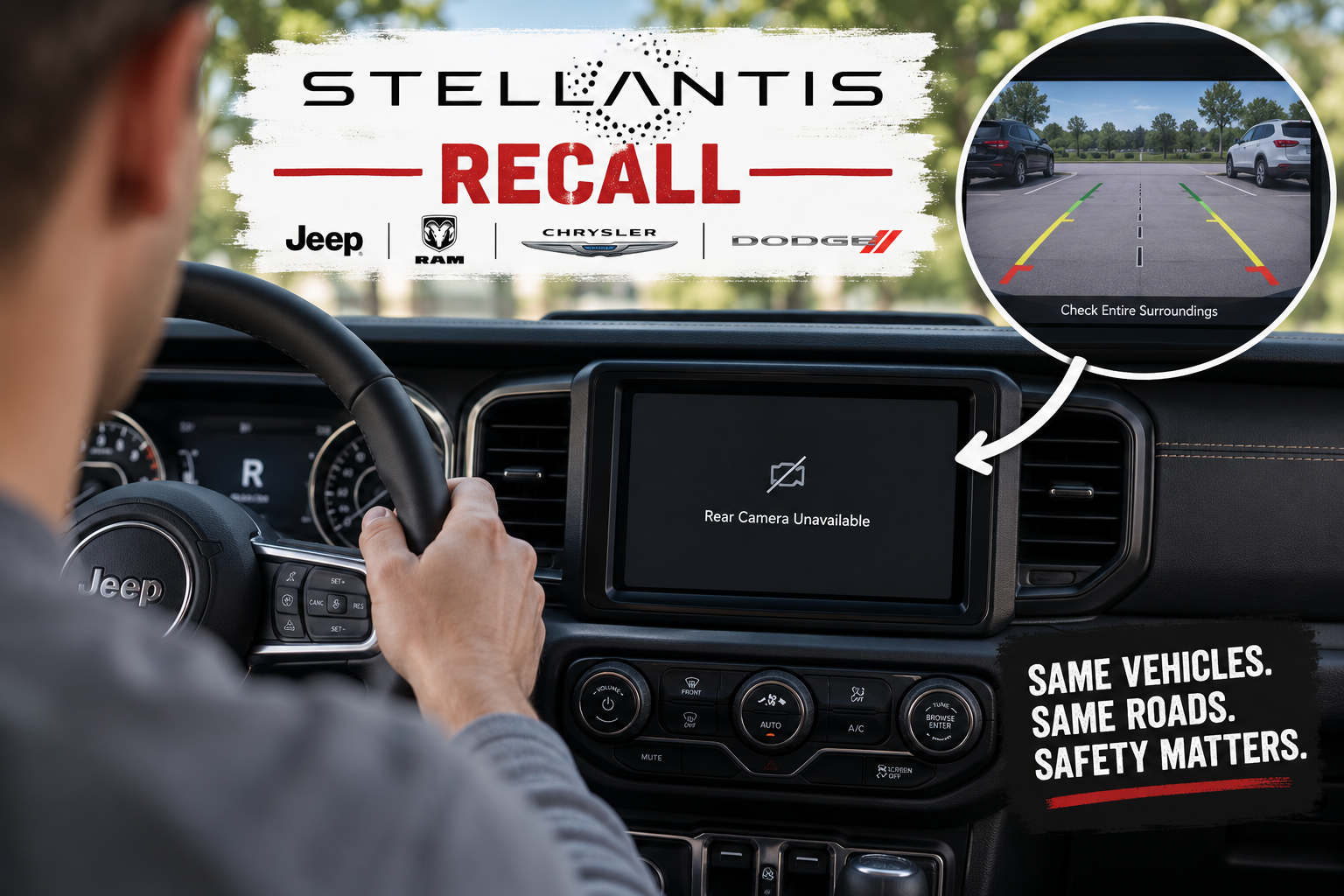
  • Florida Lemon Law Refund Calculation: How Payouts Work

    Florida Lemon Law Refund Calculation: How Payouts Work

    Florida Lemon Law Refund Calculation: How Payouts Work

    Most people who look up the Florida lemon law refund calculation want one number. What is the car actually worth back to me? The honest answer is that Florida does not pay a settlement in the way a car accident case does. It runs a formula.

    Florida’s lemon law lives in Chapter 681, Florida Statutes, also called the Motor Vehicle Warranty Enforcement Act. It does not award pain and suffering. It does not award punitive damages. What it does is unwind the purchase, hand the vehicle back to the manufacturer, and put money back in the buyer’s pocket according to a calculation the Legislature wrote down.

    Below is how that calculation works, what gets added, what gets subtracted, and how a Chapter 681 matter actually moves from a repair order to a check.

    What Florida’s Lemon Law Pays: Refund or Replacement

    Under Fla. Stat. § 681.104, once a manufacturer cannot fix a defect after a reasonable number of attempts, it has 40 days to do one of two things. It either repurchases the vehicle and refunds the full purchase price minus a reasonable offset for use, or it swaps the vehicle for a replacement the consumer accepts.

    There is an important asymmetry buried in that section. The consumer has an unconditional right to choose the refund instead of the replacement. The manufacturer does not get to force a swap. That single sentence is why most Florida lemon law buyback outcomes end in cash rather than a new car.

    If a replacement is chosen instead, section 681.104 requires it to be identical or reasonably equivalent, and the statute defines that as a vehicle whose manufacturer’s suggested retail price does not exceed 105 percent of the original. The consumer still pays the offset for use in that scenario, just in the other direction.

    Key takeaway: Chapter 681 is a rescission statute, not a damages statute. It is built to undo the transaction, not to compensate for the aggravation of owning a broken car.

    How the Florida Lemon Law Repurchase Calculation Works

    A Florida repurchase award is built from four moving parts. Three of them add to the number. One of them subtracts. Each is defined in Fla. Stat. § 681.102, which is where most of the real math lives.

    Purchase Price

    Section 681.102 defines purchase price as the cash price from the contract, including any allowance for a trade-in vehicle. It excludes debt rolled in from another transaction, so negative equity carried over from an old loan does not get refunded.

    Trade-ins get their own rule. The net trade-in allowance in the contract controls if both sides accept it. If they don’t, the statute sets the allowance at 100 percent of the trade-in’s retail price in the applicable NADA guide in effect at the time of the trade, and it makes the manufacturer supply the book.

    Collateral Charges

    These are the extra costs incurred purely because the vehicle was acquired. Section 681.102 lists manufacturer-installed or agent-installed items, service charges, earned finance charges, sales taxes, and title charges. Sales tax on a Florida vehicle purchase is often several thousand dollars on its own, so this category matters.

    Incidental Charges

    Incidental charges are reasonable costs caused directly by the defect. Towing when the vehicle died on the shoulder of I-4. A rental while it sat at the service department. Section 681.104 requires that a refund or replacement include all reasonably incurred collateral and incidental charges, which is why receipts matter as much as repair orders.

    The Reasonable Offset for Use

    This is the deduction, and it is the part almost everyone gets wrong. Section 681.102 defines it precisely.

    The Florida offset formula: Miles attributable to the consumer, multiplied by the base selling price on the purchase invoice, divided by 120,000. For a recreational vehicle, the denominator is 60,000 instead.

    Two details inside that formula move the number a lot. First, the multiplier is the base selling price on the invoice, not the out-the-door total. The statute specifically excludes taxes, government fees, and dealer fees from that figure, so the offset is calculated on a smaller number than most people assume.

    Second, the mileage runs up to the date of a settlement agreement or the arbitration hearing, whichever comes first. Not the date the defect appeared. Not the date the notice went out. Miles driven while a claim is pending keep increasing the deduction.

    Florida spreads that offset across 120,000 miles, which is a longer runway than several other states use. A New York or New Jersey number will not match a Florida number for the same vehicle and the same odometer reading, because the denominators and the starting points differ.

    A Worked Example: A Buyback in Tampa

    Say Marisol Vega buys a new midsize SUV from a dealership on North Dale Mabry in Tampa. The purchase invoice shows a base selling price of $36,000. With 7 percent sales tax, title and tag, and a dealer fee, her total contract price comes to $39,834.

    The transmission shudders and slips starting at 1,800 miles. It goes back four separate times over eleven months. Marisol pays $340 for a tow off the Selmon Expressway and $520 for a rental while the SUV sits at the service department. By the time her arbitration hearing is scheduled, the odometer reads 9,000 miles.

    Her offset for use is 9,000 miles times $36,000, divided by 120,000. That comes to $2,700.

    • Purchase price and collateral charges: $39,834
    • Incidental charges (tow plus rental): $860
    • Less reasonable offset for use: $2,700
    • Net repurchase figure: $37,994

    Notice that the offset was calculated off $36,000, not $39,834. Running it off the higher figure would have produced $2,987 and cost Marisol close to $300. That gap is the single most common arithmetic error in Florida repurchase calculations.

    Section 681.104 also directs that refunds go to the consumer and to the lienholder of record as their interests appear. If Marisol still owed $22,000 on the loan, that portion goes to the lender and the balance goes to her. She hands over clear title and possession in exchange.

    Marisol is a fictional example used to illustrate the statutory formula. Real calculations depend on the actual contract documents and the odometer reading on the hearing date.

    How Leased Vehicles Get Paid Out

    Leases are split differently. Section 681.104 says the lessee receives the lessee cost and the lessor receives the lease price minus the lessee cost. Lessee cost is defined in section 681.102 as the aggregate deposit and rental payments already paid to the lessor, excluding debt from other transactions.

    Say Darnell Whitfield leases a sedan in Orlando with $3,500 down and fourteen monthly payments of $520 before the defect claim resolves. His lessee cost is $10,780. The offset formula still applies, but for a lease it runs off the agreed upon value in the lease agreement rather than a purchase invoice.

    The statute also bars any early lease termination penalty against a lessee who receives a refund or replacement under Chapter 681. The leasing company does not get to charge for ending a lease the law is ending.

    Florida Lemon Law Attorney Fees and Other Money the Statute Allows

    Chapter 681 does not provide for an award of attorney’s fees as part of a decision by the Florida New Motor Vehicle Arbitration Board. Consumers may be represented by counsel at a Board hearing under section 681.1095, but the fee-shifting language sits in other sections.

    Section 681.112 governs consumer remedies in court. It directs that a court award a consumer who prevails the amount of any pecuniary loss, litigation costs, reasonable attorney’s fees, and appropriate equitable relief.

    Section 681.1095 adds pressure on the back end. If a manufacturer appeals a Board decision that favored the consumer and the court upholds it, recovery includes the value of the award, attorney’s fees incurred confirming it, all costs, and continuing damages of $25 per day for every day past the 40-day compliance window. If the court finds the appeal was brought in bad faith, it must double the total award and may triple it.

    There is also a stick pointed the other way. Section 681.106 makes a consumer liable for the manufacturer’s costs and reasonable attorney’s fees if a court finds the claim was filed in bad faith, solely to harass, or with no justiciable issue of law or fact.

    How a Florida Lemon Law Claim Actually Moves

    Florida runs a sequence, and skipping a step generally ends the claim. Chapter 681 lays it out in order.

    1. The defect is first reported to the manufacturer or an authorized service agent during the Lemon Law rights period, which section 681.102 defines as the 24 months following original delivery.
    2. Repair orders accumulate. Section 681.103 requires the service agent to hand over an itemized, legible repair order every time, showing the diagnosis, the work performed, the dates, and the odometer readings.
    3. Written notice goes to the manufacturer, not the dealer, by registered or express mail. Section 681.104 triggers this after three repair attempts on the same problem, or after the vehicle has been out of service for 15 or more cumulative days.
    4. The manufacturer gets a final shot. It has 10 days from receipt to respond and direct the vehicle to a reasonably accessible facility, then 10 more days to fix it. For a recreational vehicle, that repair window is 45 days.
    5. The presumption attaches. Under section 681.104, a reasonable number of attempts is presumed after three repairs plus the final attempt, or after 30 or more cumulative days out of service. For recreational vehicles the threshold is 60 days.
    6. If the manufacturer runs a state-certified dispute settlement program, section 681.108 requires that program first. If it does not, or the program fails to decide within 40 days, the dispute goes to the Board.
    7. A request for arbitration is filed with the Department of Legal Affairs, which screens it for eligibility under Fla. Stat. § 681.109.

    The Attorney General’s Office publishes a Motor Vehicle Defect Notification form that can be used for that written notice step. Mailing a copy of that form to the Attorney General does not start a claim on its own. It is one step toward becoming eligible to file one.

    What Happens at a Board Hearing

    The Florida New Motor Vehicle Arbitration Board sits in three-member panels. Section 681.1095 requires it to hear cases in locations around the state so a consumer in Jacksonville is not forced to travel to Tallahassee, and to hear an approved dispute within 40 days and issue a decision within 60 days.

    At the hearing, both sides may present testimony and evidence, cross-examine witnesses, and be represented by counsel. The panel grants relief if it finds a reasonable number of repair attempts were undertaken, then applies the statutory formula to set the refund or replacement terms.

    Manufacturers are required to participate. A decision in the consumer’s favor obligates the manufacturer to comply within 40 days of receipt. Either side may petition the circuit court within 30 days, and that appeal is a trial de novo in the county where the consumer lives, where the vehicle was acquired, or where the hearing was held. Procedural details are filled in by Chapter 2-30 of the Florida Administrative Code.

    Deadlines That Control Everything

    Florida’s filing windows are short and they are hard. Section 681.109 requires a request for Board arbitration no later than 60 days after the Lemon Law rights period expires, or within 30 days after final action by a certified program, whichever falls later.

    Section 681.112 sets a separate clock for court. A civil action under the chapter must be commenced within one year after the rights period expires, or within one year after final action by the procedure, the department, or the Board.

    Timing matters: Because the Lemon Law rights period runs 24 months from delivery, the arbitration window can close roughly 26 months after a vehicle is first driven off the lot. Section 681.1095 also requires that a dispute be submitted to the department, and to the Board if eligible, before a civil action on a section 681.104 matter is filed.

    One more provision worth knowing. Section 681.115 voids any agreement in which a consumer waives, limits, or disclaims Chapter 681 rights, including confidentiality clauses attached as a condition. Those rights also extend to a later transferee of the vehicle.

    Common Questions About Florida Lemon Law Compensation

    Does the Florida lemon law cover used cars?

    Generally no. Section 681.102 defines a motor vehicle under the chapter as a new vehicle, and it includes demonstrators and leased vehicles where a manufacturer’s warranty was issued as a condition of sale. It excludes trucks over 10,000 pounds gross vehicle weight, motorcycles, mopeds, off-road vehicles, and the living facilities of recreational vehicles. Used vehicle disputes usually run through other bodies of law entirely.

    Can a Florida claim be brought against the dealership?

    Chapter 681 aims at the manufacturer. Section 681.113 says the chapter generally imposes no liability on a dealer and creates no cause of action against one, apart from written express warranties the dealer made separately from the manufacturer’s. Dealers usually cannot be named as defendants in a Chapter 681 action.

    What happens to a repurchased vehicle afterward?

    It gets branded and tracked. Section 681.114 requires the manufacturer to report the vehicle identification number to the department within 10 days. Anyone later selling or leasing that vehicle must clearly and conspicuously disclose the nature of the defect, and the manufacturer must warrant a correction for one year or 12,000 miles, whichever comes first.

    Is there federal law that applies alongside Chapter 681?

    Yes. The Magnuson-Moss Warranty Act is the federal statute governing written warranties on consumer products, and it carries its own fee-shifting provision. Section 681.112 states that Chapter 681 does not prohibit a consumer from pursuing other rights or remedies available under other law.

    What if a manufacturer ignores a Board decision?

    Section 681.1095 gives the department authority to ask a circuit court to impose fines of up to $1,000 per day against a manufacturer that neither complies nor appeals, until the total reaches twice the purchase price of the vehicle. Those proceeds go into the Motor Vehicle Warranty Trust Fund rather than to the consumer.


    The Short Version

    A Florida lemon law payout is the purchase price plus collateral and incidental charges, minus a mileage offset calculated on the base selling price and spread over 120,000 miles. The path there runs through repair orders, written notice by registered or express mail, sometimes a manufacturer’s certified program, and then the Florida New Motor Vehicle Arbitration Board.

    The arithmetic is fixed by statute, but the inputs are not. The invoice, the trade-in allowance, the receipts, and the odometer reading on the hearing date all move the final number.

    This article is for educational purposes only and is not legal advice. Reading it does not create an attorney-client relationship. For advice on your specific situation, consult a licensed attorney in your state.
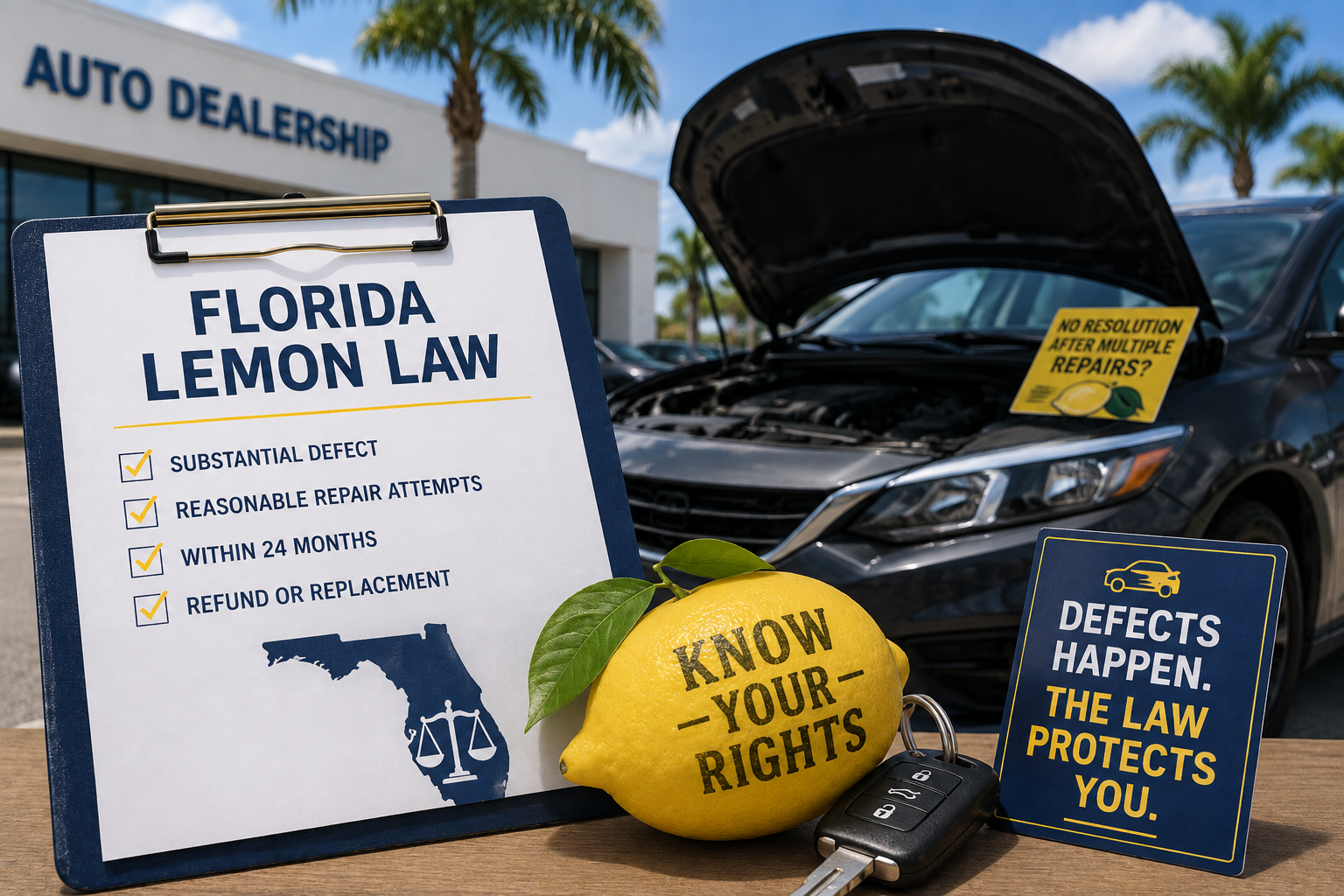
  • Florida Lemon Law and the Stellantis Backup Camera Recall

    Florida Lemon Law and the Stellantis Backup Camera Recall

    Florida Lemon Law and the Stellantis Backup Camera Recall

    You shift your brand new Jeep into reverse and the screen stays black. No camera image, no warning, nothing. That is the problem behind one of the largest vehicle recalls of the year, and it is why a lot of Florida drivers are suddenly reading up on Florida lemon law.

    In August 2026, Stellantis recalled roughly 955,000 vehicles worldwide because of a radio software problem that can stop the rearview camera image from appearing when you back up. The camera itself is fine. The software that puts the picture on your center screen is the part that fails.

    For most owners this will end with a free software update and nothing more. For a smaller group, the fix will not stick. This article explains what the recall actually covers and how Florida’s lemon law generally treats a defect that keeps coming back after repairs.

    What Went Wrong With the Camera

    The recall is filed with federal regulators as NHTSA campaign number 26V531000. Stellantis calls it recall 78D internally. It covers vehicles built with a specific Uconnect 5 radio unit, and the bug lives in that radio’s software.

    When it happens, you get no alert. You put the car in reverse and the image that should appear on the media screen simply does not load. There is no pattern the driver can predict and no way to tell in advance whether this trip will be the one where the screen goes dark.

    Federal safety records list 844,027 affected vehicles in the United States. Stellantis originally told reporters the number was closer to 848,511. The gap is normal. Manufacturer press estimates and the final federal count often differ slightly once the vehicle list is nailed down.

    Which Vehicles Are Covered

    The list runs across all four Stellantis brands and covers mostly 2026 model year vehicles, with the Chrysler Pacifica and Dodge Charger stretching into 2027.

    • Jeep Wrangler, Gladiator, Compass, Cherokee, Grand Cherokee, Grand Cherokee L, Grand Wagoneer and Grand Wagoneer L
    • Ram 1500, Ram 2500, ProMaster and ProMaster EV
    • Chrysler Pacifica, Pacifica Plug-In Hybrid and Voyager
    • Dodge Charger

    Owner notification letters started going out around September 1, 2026. Vehicle identification numbers became searchable on the federal database on August 20, so owners can check a specific vehicle through NHTSA’s VIN lookup tool without waiting for mail. The repair is free either way, whether it arrives as an over the air update or gets loaded at a dealership.

    Why a Dark Screen Counts as a Safety Problem

    It would be easy to write this off as an infotainment annoyance. Federal regulators do not see it that way. Backup cameras have been required equipment on new light duty vehicles since the 2018 model year under Federal Motor Vehicle Safety Standard 111, 49 C.F.R. section 571.111, which says the rear image has to appear by default at the start of every backing event.

    Because the image can fail to show up, these vehicles are recorded as failing to meet that standard. That makes this a noncompliance recall, not just a defect recall. The distinction matters. It means a federal agency has already written down that the vehicle does not meet a safety requirement, which is a useful fact for anyone later arguing the defect affects safety.

    Stellantis says it is not aware of any crashes or injuries connected to this defect. The company’s interim guidance is to stay alert and use the rearview and side mirrors when reversing until the update is installed.

    How Florida Lemon Law Handles a Defect Like This

    Florida’s lemon law is officially the Motor Vehicle Warranty Enforcement Act, found at Chapter 681, Florida Statutes. It applies to new and demonstrator vehicles bought or leased in Florida for personal, family or household use.

    The law does not cover every flaw. Fla. Stat. section 681.102 defines a nonconformity as a defect or condition that substantially impairs the use, value or safety of the vehicle. A camera that will not display when you back up is a reasonable candidate for the safety half of that test, especially given how federal regulators classified it.

    That same section sets the clock. The Lemon Law rights period runs 24 months from the day the vehicle was originally delivered, and the defect has to be reported to the manufacturer or an authorized dealer inside that window.

    Does a Recall Count as a Repair Attempt?

    This is the question people ask most often, and the answer surprises them. A recall notice by itself is not a lemon law claim. It is a notice that a fix exists. What the statute counts is documented repair attempts for the same nonconformity.

    Under Fla. Stat. section 681.104, the law presumes a manufacturer has had a reasonable number of chances in one of two situations. The first is when the same problem has gone in for repair at least three times, the consumer then sends the manufacturer written notice by registered or express mail, the manufacturer gets a final attempt, and the problem still exists. The second is when the vehicle has been out of service for repairs for 30 or more cumulative days.

    Florida spells out what those terms mean in its regulations, not just its statutes. Rule 2-30.001, Florida Administrative Code defines a repair attempt as replacing a component or making an adjustment to correct a nonconformity, and it counts an out of service day as any day, weekends and holidays included, that the vehicle sits at an authorized service agent for examination or repair.

    There is a separate written notice step that catches people off guard. Section 681.104 also says that once a vehicle has been out of service for 15 or more cumulative days, the consumer notifies the manufacturer in writing by registered or express mail so it gets a chance to inspect or repair. Skipping that step can undercut the 30 day path later.

    For a software glitch with an over the air fix, most owners will never get near those numbers. One update, one backup camera that works again, done. The owners who end up with a real claim are the ones where the screen keeps failing after the update and the dealer keeps writing repair orders for it.

    A Hypothetical: Danielle in Hillsborough County

    Say Danielle buys a new 2026 Jeep Grand Cherokee from a dealership off Dale Mabry Highway in Tampa. Base price on the invoice is $52,000 before taxes and fees. She takes delivery in March.

    In September the recall notice arrives and the over the air update installs itself. Two weeks later the camera goes black again while she is backing out of a spot at her kid’s school. She brings it in. The dealer reloads the software and hands the Jeep back.

    It fails again in October. Third visit in November, and the service department keeps the vehicle for eleven days waiting on a replacement radio module. The camera works for a month and then quits a fourth time.

    By this point Danielle has three documented repair attempts for the same problem, all inside her 24 month rights period, all written up on repair orders that describe the same symptom. That is the fact pattern the statute is built around. Written notice to the manufacturer by registered or express mail would give it a final attempt, and if the camera still failed after that, the presumption in section 681.104 would generally be available to her.

    What a Florida Buyback Would Look Like

    If a Florida claim succeeds, the manufacturer has to repurchase the vehicle and refund the purchase price less a mileage offset, or provide a replacement vehicle the consumer accepts. The consumer has an unconditional right to pick the refund instead of the replacement, and the manufacturer has 40 days to comply.

    Florida’s mileage offset formula is written into section 681.102 as the reasonable offset for use. It is the miles you drove, multiplied by the base selling price before taxes and dealer fees, divided by 120,000.

    Running Danielle’s numbers: 9,000 miles multiplied by her $52,000 base price, divided by 120,000, comes to $3,900. That is the offset subtracted from her refund. Recreational vehicles use 60,000 as the divisor instead of 120,000, which makes the offset twice as large per mile.

    The refund also has to include reasonably incurred collateral and incidental charges. Collateral charges include things like sales tax, title charges and earned finance charges.

    Where These Disputes Get Decided in Florida

    Florida does something most states do not. It runs its own arbitration board through the Attorney General’s office. Fla. Stat. section 681.1095 creates the Florida New Motor Vehicle Arbitration Board, which hears cases in three member panels at locations around the state. The Attorney General’s office publishes its own walkthrough of how the Florida lemon law works.

    There is a wrinkle. Fla. Stat. section 681.108 says that if the manufacturer runs its own dispute program that Florida has certified, the consumer generally has to go through that program first. If that program does not decide within 40 days, or the consumer is unhappy with the outcome, the dispute can move to the state board.

    Deadlines are strict. Under Fla. Stat. section 681.109, a request for arbitration has to be filed no later than 60 days after the Lemon Law rights period expires, or 30 days after a certified program’s final action, whichever is later. Once approved, the board is supposed to hear the case within 40 days and decide within 60. The Attorney General also publishes guidance on hearings before the arbitration board.

    Court is a separate track with its own clock. Fla. Stat. section 681.112 requires an action under the chapter to be filed within one year after the rights period expires, or within one year after the final action of a certified program, the department or the board.

    Questions Florida Owners Are Asking

    How many recalls before lemon law applies?

    There is no recall count in the statute. Florida measures repair attempts for the same nonconformity and days out of service, not how many recall notices arrived in the mail. A vehicle with five unrelated recalls that were all fixed on the first try generally does not fit the presumption. A vehicle with one defect that came back four times might.

    Does an over the air update count as a repair attempt?

    This is genuinely unsettled territory, and Florida’s regulation is the place to start. Rule 2-30.001 says examination or repair performed by anyone other than the manufacturer or its authorized service agent is not considered a repair attempt. A wireless update pushed by the manufacturer is not a third party fix, but it also does not produce the paperwork the law expects.

    That paperwork matters. Fla. Stat. section 681.103 requires the manufacturer, through its service agent, to hand the consumer an itemized repair order every time the vehicle comes back from warranty work, listing the reported problem, the diagnosis, the work performed, the date and the odometer reading. An update that installs in your driveway does not generate one of those. Owners who bring the vehicle in and collect the paperwork end up with a much clearer record.

    Does Florida lemon law cover used cars?

    Chapter 681 applies to new and demonstrator vehicles. It is not a used car statute. That said, Fla. Stat. section 681.115 extends these rights to a later transferee of the vehicle, and it voids any agreement that tries to waive or limit them. A 2026 Jeep sold secondhand nine months into its life is a different situation than a ten year old trade in.

    Can the dealership be held responsible?

    Generally not under this chapter. Fla. Stat. section 681.113 is unusually direct and says the lemon law does not create a cause of action against a dealer, with narrow exceptions such as written express warranties the dealer made on its own. The obligation to buy back or replace sits with the manufacturer.

    Is there a federal option too?

    Yes. The Magnuson-Moss Warranty Act is a federal warranty law that runs alongside state lemon laws. Section 681.112 says explicitly that Chapter 681 does not prohibit a consumer from pursuing other rights or remedies under other law.

    The Short Version

    For the overwhelming majority of the 844,027 affected owners, this recall ends with a free software update and a working camera. Florida’s lemon law is not built for problems that get fixed on the first try.

    Where it becomes relevant is the smaller set of vehicles where the same defect keeps returning after multiple documented repair attempts, or where the vehicle piles up 30 or more cumulative days in the shop. Repair orders, dates and written notice sent by registered or express mail are what the statute runs on.

    This article is for educational purposes only and is not legal advice. Reading it does not create an attorney-client relationship. For advice on your specific situation, consult a licensed attorney in your state.

  • Florida Lemon Law: A Plain-English Guide to Your Rights

    Florida Lemon Law: A Plain-English Guide to Your Rights

    Florida Lemon Law: Your Plain-English Guide to Rights, Deadlines, and Refunds

    You bought a new car in Florida. Maybe it’s a Ford F-150 from a dealer on US-1, or a Honda Accord you picked up in Doral. Either way, you expected reliable transportation, not a vehicle that lives at the service center.

    That’s where the Florida Lemon Law comes in. It’s a state statute designed to put pressure on manufacturers when a defect can’t be fixed after a fair shot. If your car qualifies, the law gives you a path to a refund or a replacement vehicle, not just another repair attempt.

    This guide breaks down how the Florida Lemon Law actually works. We’ll cover what qualifies as a lemon, the 24-month “rights period,” what counts as a reasonable repair attempt, how state arbitration works, the rules on used cars, and the deadlines that can quietly kill a claim. No legalese. Just clear explanations with examples you can actually picture.

    What Is the Florida Lemon Law?

    The Florida Lemon Law isn’t just a nickname. The official statute is called the Motor Vehicle Warranty Enforcement Act, found at Chapter 681 of the Florida Statutes (sections 681.10 through 681.118). The Florida Legislature passed it in 1983 because car defects were creating real financial hardship for buyers, and existing remedies under the Uniform Commercial Code weren’t doing enough.

    The law’s basic idea is simple. If you buy or lease a new vehicle and it has a substantial defect the manufacturer can’t fix after a reasonable number of tries, you shouldn’t be stuck with it. The statute gives you two main remedies. Either the manufacturer takes the car back and refunds your money, or they give you a comparable replacement vehicle.

    The law uses the word “nonconformity” instead of “defect.” Under Fla. Stat. § 681.102, a nonconformity is a defect or condition that substantially impairs the use, value, or safety of the motor vehicle. A loose cup holder isn’t a nonconformity. A transmission that jerks unpredictably at highway speed almost certainly is.

    One thing to understand from the start. The Florida Lemon Law puts the obligation on the manufacturer, not the dealer. The dealer is treated as the manufacturer’s authorized service agent. So when you read about notice requirements and refund obligations, the entity on the hook is usually Ford, Toyota, or General Motors, not the dealership where you signed the paperwork.

    What Vehicles Does the Florida Lemon Law Cover?

    This is where a lot of people get tripped up. The Florida Lemon Law has a specific definition of “motor vehicle” and it leaves some categories out.

    The law covers new vehicles that are sold, transferred, or leased in Florida and used primarily for personal, family, or household purposes. That includes:

    • New cars
    • New trucks (with a weight limit, more on that below)
    • Leased new vehicles, as long as they came with a manufacturer’s warranty
    • Demonstrator vehicles (the “demo” cars dealers let people test drive)
    • The chassis and self-propelled components of recreational vehicles

    What the law specifically excludes under Fla. Stat. § 681.102:

    • Motorcycles
    • Mopeds
    • Off-road vehicles
    • Trucks with a gross vehicle weight over 10,000 pounds
    • The living facilities portion of recreational vehicles

    So if you bought a heavy-duty work truck for your construction business in Tampa, and it weighs over 10,000 pounds, the Florida Lemon Law won’t help. If you bought a motorhome, the engine and chassis might be covered but the living quarters aren’t. These distinctions matter, and they’re the kind of detail that often surprises consumers.

    Here’s a quick example. Say Maria buys a new Toyota RAV4 from a dealer in Orlando and uses it to commute to work. Six weeks in, the transmission starts slipping. That vehicle is squarely covered. Now imagine her neighbor, Dave, buys a used Ducati motorcycle from the same dealer. Even if the bike has a serious defect, the Florida Lemon Law doesn’t apply to motorcycles at all. Dave would need to look at the federal Magnuson-Moss Warranty Act and his motorcycle’s written warranty, which we’ll get into later.

    The 24-Month Florida Lemon Law Rights Period

    The Florida Lemon Law has a window. It’s called the Lemon Law rights period, and it lasts 24 months from the date the vehicle was delivered to you. That’s the most important date in your file.

    Within those 24 months, you need to do two things to set up a potential claim. First, you have to actually report the defect to the manufacturer or its authorized service agent. Second, the manufacturer needs to fail to fix it after a reasonable number of attempts.

    There’s no mileage cap built into the statute the way some states have. So in theory, a high-mileage commuter who drives 30,000 miles in a year could still be within the rights period at month 23. What matters is the calendar, not the odometer. Mileage still matters as evidence of how the vehicle has been used and when problems started, but it isn’t the disqualifying factor.

    A common point of confusion. The 24-month rights period is not the deadline to file a lawsuit. It’s the window during which the defect has to surface and be reported. The actual statute of limitations is separate, and we’ll cover that next.

    What Counts as a “Reasonable Number of Repair Attempts”

    The Florida Lemon Law doesn’t say a manufacturer has to fix every problem on the first try. The law gives them a reasonable number of attempts. The statute, at Fla. Stat. § 681.104, creates a legal presumption that the manufacturer has had a reasonable number of attempts when one of two things happens.

    Path One: Three Repair Attempts for the Same Defect

    You bring the vehicle in three separate times for the same nonconformity. The manufacturer or its authorized service agent has had a fair shot. Some sources also reference a fourth-attempt rule for serious defects after written notice, but the core trigger is the three-strikes pattern for the same recurring issue.

    Path Two: 30 Cumulative Days Out of Service

    If the vehicle has been out of service for repair for a cumulative total of 30 or more days during the Lemon Law rights period, the statute creates a presumption that the manufacturer has had a reasonable number of attempts to conform the vehicle to the warranty. Important detail. After 15 cumulative days out of service, you generally need to send the manufacturer written notice. That notice is what triggers the manufacturer’s last chance to perform a final repair.

    Let’s make this concrete. Picture Jamal, who buys a new Chevy Silverado from a dealer in Jacksonville. The check engine light keeps coming on. He brings it in to the dealership in March, again in May, and again in August. Three repair attempts for the same problem, all during the 24-month rights period. Under the Florida Lemon Law, that pattern creates a presumption that Chevrolet has had a reasonable number of attempts to fix the issue.

    Or picture Linda from Cape Coral. Her new SUV has been sitting at the service center off and on for transmission work. By month nine, she totals it up and realizes the vehicle has been at the shop for 32 cumulative days. After she sent the 15-day written notice and the manufacturer didn’t fix it, the 30-day total triggers the presumption.

    Whether the actual claim succeeds depends on documentation, the nature of the defect, and other factors. But the statutory presumption is the legal lever that moves the case forward.

    What Defects Qualify as a “Nonconformity”

    Not every quirk in a new car is a lemon. The statute requires the defect to substantially impair the vehicle’s use, value, or safety.

    Defects that typically do qualify include:

    • Transmission failures or persistent slipping
    • Engine stalling or sudden power loss
    • Brake system failures
    • Steering defects
    • Persistent electrical failures that affect operation
    • Recurring safety system malfunctions, like airbags or anti-lock brakes

    Defects that typically don’t qualify on their own include:

    • Cosmetic issues like paint imperfections or interior trim
    • Squeaks or minor rattles that don’t affect operation
    • Aftermarket parts the manufacturer didn’t install
    • Damage from accidents, abuse, neglect, or unauthorized modifications

    The statute specifically excludes defects caused by accident, abuse, neglect, or modifications not authorized by the manufacturer. If you lifted your truck on enormous tires and the suspension fails, that’s not the manufacturer’s problem. If your engine fails and you skipped every recommended oil change, you have a hard road ahead.

    How the Final Repair Attempt and Manufacturer Notice Work

    The Florida Lemon Law doesn’t let you spring a claim on the manufacturer by surprise. The statute requires written notice to the manufacturer (not just the dealer) so the manufacturer has a final chance to fix the problem.

    The state provides a form called the Motor Vehicle Defect Notification, sometimes referred to as the MVDN. You send it by registered or express mail to the manufacturer’s address listed in your owner’s manual or warranty booklet. Once the manufacturer receives that notice, it generally has a window (typically 10 days) to direct the vehicle to an authorized service agent for a final repair attempt. The service agent then has a reasonable amount of time, usually around 10 more days, to conform the vehicle to the warranty.

    If the final repair attempt fails, you’ve now built the foundation for the next step. State arbitration.

    The Florida New Motor Vehicle Arbitration Board

    Unlike some states, Florida funnels most lemon law disputes through a state-administered arbitration process before they get to court. The body that handles this is the Florida New Motor Vehicle Arbitration Board, administered by the Florida Department of Legal Affairs (part of the Attorney General’s office).

    There’s a wrinkle worth understanding. If the manufacturer has a “certified” informal dispute settlement procedure (think of it as the manufacturer’s own complaint process), you may be required to use that first before the state board will hear your case. The catch is that you only have 60 days after the Lemon Law rights period expires to file with the certified procedure. Miss that, and you can lose the right to state arbitration entirely.

    If the manufacturer doesn’t have a certified procedure, or if you’ve gone through it and aren’t satisfied, you can file a request for state arbitration with the Department of Legal Affairs. The board reviews your case, holds a hearing, and issues a decision. The manufacturer has 40 days to comply with a decision in your favor (whether refund or replacement). If they don’t, the statute allows for fines up to $1,000 per day, capped at twice the purchase price of the vehicle.

    Arbitration decisions can be appealed to the circuit court by either side, and the appeal is heard as a trial de novo. That means the circuit court doesn’t just review what the board did, it hears the whole case fresh.

    Florida Lemon Law Refund and Buyback Calculation

    If you win a buyback under the Florida Lemon Law, the manufacturer doesn’t just hand you the original sticker price. The statute spells out what’s included and what gets deducted.

    What you generally get back:

    • The full purchase price of the vehicle, including any trade-in allowance
    • Collateral charges (sales tax, registration fees, title fees, financing charges, and similar costs)
    • Incidental damages tied to the defect, like rental car expenses or tow charges

    What gets deducted:

    • A reasonable allowance for the consumer’s use of the vehicle

    That “use offset” is calculated under the statute based on the mileage on the vehicle at the time of the first repair attempt for the nonconformity. The formula uses 120,000 miles as the assumed useful life. So if your car had 12,000 miles when you first reported the defect, the offset would be roughly 12,000 divided by 120,000, or 10 percent of the purchase price. The exact math gets technical, but that’s the rough shape of it.

    If you choose a replacement vehicle instead of a refund, the manufacturer must provide a comparable new vehicle acceptable to you, with the same mileage offset applied. You don’t have to take the replacement. The choice is yours.

    Here’s an example. Suppose Tom bought a 2025 Hyundai Tucson in Miami for $32,000 plus tax. The transmission first showed signs of trouble at 8,000 miles. After three failed repair attempts and a successful arbitration, Hyundai owes him a refund. The reasonable use offset would be roughly 8,000 divided by 120,000 times the purchase price, which is around $2,133. Add back collateral charges like sales tax and registration, subtract the offset, and Tom is looking at something close to a full refund of his out-of-pocket loss. Real numbers will vary based on the specific facts.

    Does the Florida Lemon Law Apply to Used Cars?

    Short answer. Usually no, with one important exception.

    Florida’s main lemon law (Chapter 681) is built for new vehicles, leased new vehicles, and demonstrator vehicles. Used cars sitting on a lot at a buy-here-pay-here in Lakeland generally don’t qualify under the statute.

    The exception that matters. If you buy a used car that is still under the original manufacturer’s warranty, and a substantial defect appears within the 24-month Lemon Law rights period (measured from the original delivery date, not your purchase date), you may have rights under the statute. The clock doesn’t reset when the vehicle changes hands. So a one-year-old, low-mileage car bought from a private seller could still be within its rights period if the timing works.

    For used car defects outside the statute, Florida buyers usually have two other tools.

    The Federal Magnuson-Moss Warranty Act

    This is the federal warranty law, and it applies to any consumer product covered by a written warranty. That includes used cars sold with any kind of written warranty, including certified pre-owned vehicles. The Magnuson-Moss Act has a longer window for filing suit, typically up to four or five years depending on the warranty type. It’s a separate body of law from the Florida Lemon Law, but it often runs alongside lemon claims, especially for used vehicles.

    Florida’s Used Motor Vehicle Warranty Law

    Florida has a separate statute requiring dealers to provide certain disclosures and minimum warranty terms on used vehicles, though the protections are narrower than Chapter 681. There are also rules about “as is” sales and required buyer’s guides under federal regulations.

    So if you’re in a used-car situation, the Florida Lemon Law isn’t your only option. It’s just the strongest one when it applies.

    How the Florida Lemon Law Differs From Federal Law

    A lot of people think there’s a “federal lemon law” that overrides state law. There isn’t, exactly. What exists at the federal level is the Magnuson-Moss Warranty Act, which deals with warranties on consumer products generally.

    The two laws work side-by-side. Chapter 681 is faster, has clearer presumptions, and forces arbitration through a state-run process. Magnuson-Moss is broader, covers used cars more readily, and has a longer statute of limitations. Many cases involve both. Lawyers who handle these matters routinely plead claims under both statutes when the facts support it.

    The other important difference. The Florida Lemon Law allows you to recover attorney’s fees from the manufacturer if you prevail under the statute. Magnuson-Moss also has a fee-shifting provision. This is a significant reason why these cases are economically viable for consumers who couldn’t otherwise afford to fight a major automaker.

    Statute of Limitations: The Deadline That Quietly Kills Claims

    Under Fla. Stat. § 681.112, an action under the Florida Lemon Law must be commenced within one year after the expiration of the Lemon Law rights period. So if your rights period runs out 24 months after delivery, you have one more year, roughly through month 36, to file suit. The clock can be tolled (paused) if you’ve gone through arbitration, but you can’t simply sit on the claim forever.

    This is one of the most common ways legitimate claims get lost. The vehicle has problems in months 18 through 24, the owner tries to work it out with the dealer for another year, and by the time they think about a lawyer, the deadline is closing in or already passed.

    If your vehicle is having serious problems and you’re approaching the end of the rights period, that calendar should be on your mind every week.

    How Florida Lemon Law Cases Are Handled in Court

    If state arbitration isn’t an option, or if either side appeals an arbitration decision, the case ends up in Florida’s circuit court system. Florida courts are organized into 20 judicial circuits, each covering one or more counties. For example, the 11th Judicial Circuit covers Miami-Dade County, the 17th covers Broward, the 13th covers Hillsborough (Tampa), and the 9th covers Orange and Osceola (Orlando).

    Most lemon law cases that reach court are filed in the circuit court of the county where the consumer lives or where the vehicle was purchased. If the case is appealed from arbitration, it’s heard as a trial de novo, meaning the circuit court hears the evidence as if for the first time.

    You don’t typically see lemon law cases in Florida county court, even though county court has jurisdiction over smaller civil claims, because the typical refund amount in a new car case exceeds the county court limit, and because the statute contemplates the circuit court as the appeal venue from arbitration.

    Common Misconceptions About the Florida Lemon Law

    “Florida has a 30-day return policy on new cars.”

    No. There’s no general 30-day window where you can simply bring a new car back. The 30-day reference in the statute is about cumulative days out of service for repair, which creates a presumption under § 681.104. That’s a very different thing.

    “If the dealer can’t fix it, I get to keep the car for free.”

    No. The remedy is a refund or replacement, not free vehicle ownership. The manufacturer takes the car back (less the use offset) or gives you a comparable replacement.

    “Used cars are never covered.”

    Mostly true, but not always. If a used vehicle is still inside the original 24-month Lemon Law rights period and still under the manufacturer’s warranty, the statute may apply. And federal Magnuson-Moss protections often cover used vehicles separately.

    “I can skip arbitration and go straight to court.”

    Sometimes, but not always. If the manufacturer has a certified informal dispute settlement procedure, you generally have to use it first. And state arbitration through the Florida New Motor Vehicle Arbitration Board is built into the process. Lawyers can advise on the best route, but skipping required steps can sink a claim.

    “Attorney’s fees will eat up my recovery.”

    The Florida Lemon Law has a fee-shifting provision. If you prevail, the manufacturer is responsible for reasonable attorney’s fees. The same is generally true under Magnuson-Moss. This is one of the rare areas of consumer law where the playing field is structured so consumers can actually afford to fight.

    Frequently Asked Questions About Florida Lemon Law

    What qualifies as a lemon in Florida?

    A new motor vehicle qualifies under Chapter 681 if it has a nonconformity (a defect that substantially impairs use, value, or safety) and the manufacturer fails to fix it after a reasonable number of attempts within the 24-month Lemon Law rights period.

    How long do I have to file a Florida Lemon Law claim?

    The defect has to be reported within the 24-month rights period from delivery. A lawsuit under the statute must be filed within one year after that rights period expires. Arbitration deadlines are shorter, especially the 60-day window for certified manufacturer procedures.

    Does the Florida Lemon Law cover leased cars?

    Yes, as long as the vehicle is leased new and came with a manufacturer’s warranty. The same 24-month rights period applies.

    Can I get my money back under the Florida Lemon Law?

    Yes. The remedies are a refund (purchase price plus collateral charges minus a reasonable use offset) or a comparable replacement vehicle. The consumer typically gets to choose which.

    Do I need an attorney to file a Florida Lemon Law claim?

    The statute doesn’t require one. Many people start with the manufacturer’s informal procedure or state arbitration on their own. That said, the law has a fee-shifting provision that makes hiring an attorney economically realistic, since the manufacturer pays the consumer’s fees if the consumer prevails.

    Does Florida’s Lemon Law apply to trucks?

    It applies to trucks under 10,000 pounds gross vehicle weight used primarily for personal, family, or household purposes. Heavy-duty trucks over that limit, and trucks used primarily for commercial purposes, fall outside the statute.

    Wrapping Up

    The Florida Lemon Law is one of the stronger consumer protection statutes on the books. It puts real pressure on manufacturers, gives consumers two clear remedies, and shifts attorney’s fees so the math works for ordinary buyers. But the law also has hard deadlines, narrow definitions, and procedural steps that can easily be missed by someone trying to handle a defective vehicle on their own.

    The most important takeaway is to act inside the 24-month window. Keep every repair order. Note every day the vehicle is in the shop. Send written notice to the manufacturer when the pattern is clear. Whether your situation involves a brand-new SUV in Orlando, a leased truck in Jacksonville, or a used car still under the original warranty in Miami, the timeline drives almost everything.

    This article is for educational purposes only and is not legal advice. Reading it does not create an attorney-client relationship. For advice on your specific situation, consult a licensed attorney in your state.